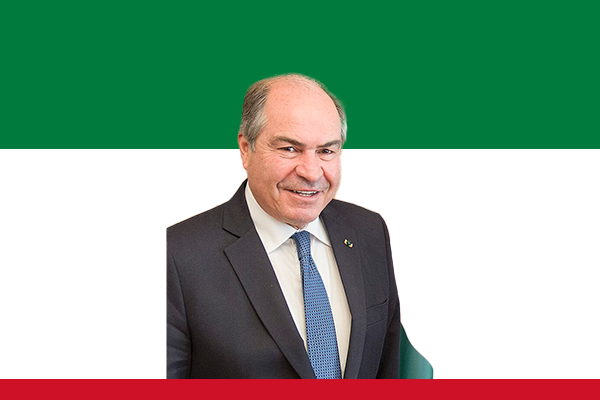
Born on 15 October 1951 in Amman, Jordan, Mulki comes from a politically active family; his father, Fawzi Mulki, previously served as Jordan’s prime minister. He holds a bachelor’s degree in production engineering from Cairo University and advanced degrees—including a master’s and PhD in industrial and systems engineering—from the Rensselaer Polytechnic Institute in the United States. Before entering frontline politics, Mulki built a diverse career spanning engineering, diplomacy, and public administration.
Mulki’s political and diplomatic career has been extensive. He served as Jordan’s ambassador to Egypt and as the country’s permanent representative to the Arab League, demonstrating his credentials in foreign affairs. Over the years, he held a range of ministerial portfolios, including minister of water, energy, supply, industry and trade, and foreign affairs, reflecting his broad policy experience. Notably, Mulki chaired Jordan’s negotiating committee during the peace negotiations with Israel in the mid‑1990s that resulted in a formal peace treaty.
Prior to his premiership, Mulki was Chief Commissioner of the Aqaba Special Economic Zone Authority, a role that positioned him at the center of economic reform and development efforts. His leadership in Aqaba was part of broader attempts to attract investment and improve competitiveness in key sectors of Jordan’s economy.
As Prime Minister, Mulki was tasked with navigating Jordan through profound economic challenges, including high public debt, unemployment, and the impacts of regional instability and the ongoing refugee crisis. His government’s economic agenda focused on fiscal consolidation and structural reforms, including negotiations with the International Monetary Fund (IMF) for a multi‑year loan program designed to reduce public debt and strengthen fiscal discipline. However, these measures—especially proposed income tax reforms and subsidy adjustments—proved controversial, sparking public debate and criticism from segments of the Jordanian population who saw them as placing undue burdens on households.
In March 2018, Jordanian trade unions and civil society groups organized strikes and protests against the government’s economic proposals. The unrest intensified after fuel and electricity price hikes, prompting King Abdullah II to intervene and freeze the increases in early June. Despite this, protests continued against elements of the fiscal reform program, leading Mulki to submit his resignation on 4 June 2018 in an effort to help defuse mounting tensions. He was succeeded by Omar Razzaz, who had served as education minister in his cabinet.
Over his long career, Mulki has been recognized domestically and internationally for his public service. His tenure drew both praise and criticism, with supporters highlighting his technical competence and commitment to long‑term fiscal stability, and detractors pointing to the social impact of austerity policies. Regardless, his time as prime minister remains a significant chapter in Jordan’s contemporary political and economic history.