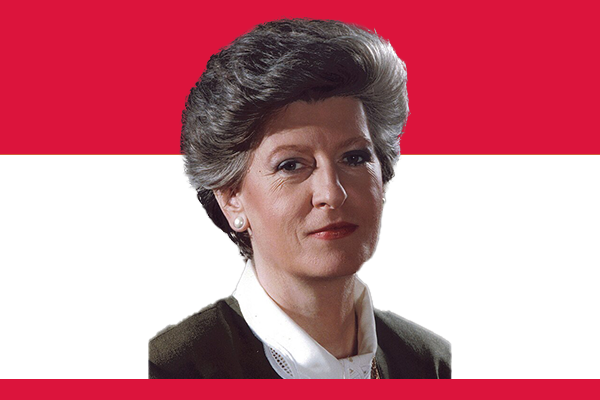
Early Life and Education
Hanna Suchocka was born on 3 April 1946 in Pleszew, Poland. She grew up in a family that valued education and social responsibility. Suchocka studied law at Adam Mickiewicz University in Poznań, one of Poland’s most respected universities. She developed a strong interest in constitutional law and public policy during her academic years.
After completing her studies, she began her career as a lecturer and researcher in constitutional law. Her academic work focused on democratic governance, legal reforms, and constitutional systems. This background later helped her become an influential policymaker in Poland’s democratic transformation.
Entry into Politics
Hanna Suchocka entered politics during the late communist period. She became associated with reform-oriented political groups that advocated democratic change in Poland. During the 1980s and early 1990s, many political activists worked to replace the communist system with democratic governance, and Suchocka actively participated in these political efforts.
In 1989, Poland held partially free elections that marked the beginning of democratic rule. Suchocka joined the parliament (Sejm) and quickly gained recognition for her legal expertise and balanced political approach. She became involved in several political parties and reform movements that supported democratic institutions and economic modernization.
Prime Minister of Poland (1992–1993)
In July 1992, Hanna Suchocka became the Prime Minister of Poland. Parliament appointed her after a period of political instability and coalition negotiations. Her government consisted of a coalition of several centrist and conservative political parties.
As prime minister, Suchocka focused on stabilizing the political system and continuing economic reforms. Her administration supported market-oriented economic policies, privatization, and cooperation with Western institutions. She also promoted legal reforms that strengthened democratic governance.
During her tenure, the government worked to improve relations with European countries and international organizations. Poland’s efforts to integrate with Western Europe gained momentum under her leadership.
However, governing a coalition proved difficult because many political parties held different priorities. In 1993, the parliament passed a vote of no confidence against her government by a single vote, which ended her term as prime minister. Despite the short duration of her leadership, her administration played an important role in consolidating Poland’s democracy.
Diplomatic Career and Later Work
After leaving the office of prime minister, Hanna Suchocka continued her public service in diplomacy and academia. In 2001, the Polish government appointed her as the Ambassador of Poland to the Holy See (Vatican). She served in this diplomatic position for more than a decade and helped strengthen relations between Poland and the Vatican.
Suchocka also participated in international legal and constitutional discussions. She contributed to various academic publications and conferences related to constitutional law, human rights, and democratic governance. Her expertise made her an influential voice in European legal and political circles.
Legacy and Significance
Hanna Suchocka remains a significant figure in Poland’s democratic history. As the first female prime minister of the country, she broke important political barriers and demonstrated the growing role of women in leadership positions. Her government helped guide Poland through a crucial phase of political and economic transformation.
Her work in diplomacy and constitutional scholarship further strengthened her reputation as a respected public figure. Many historians consider her leadership an important step in the consolidation of Poland’s democratic institutions after the fall of communism.