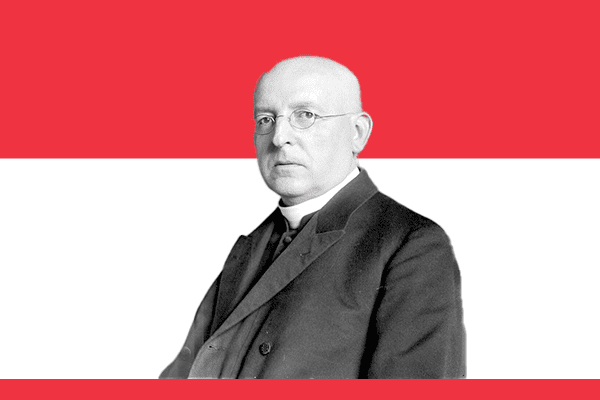
Early Life and Education
Ignaz Seipel was born on July 19, 1876, in Vienna, Austria. He grew up in a modest family and developed a strong interest in religion and education during his childhood. He attended local schools in Vienna and later studied theology at the University of Vienna. His dedication to academics and religious studies helped him gain recognition among church leaders and intellectuals.
After completing his education, Seipel became a Roman Catholic priest. Alongside his religious duties, he also taught moral theology and gained respect as a scholar. His writings and speeches reflected his deep understanding of social and political issues. Rather than limiting himself to church activities, he actively participated in public discussions about Austria’s future.
Entry into Politics
Ignaz Seipel entered politics during a period of major change in Europe. After World War I, Austria faced economic collapse, political instability, and social unrest. Seipel joined the Christian Social Party and quickly emerged as one of its leading figures. His intelligence, discipline, and communication skills helped him build a strong political reputation.
In 1921, Seipel became Chancellor of Austria for the first time. He focused on restoring order and strengthening the country’s economy. Austria struggled with inflation and financial hardship during this period, but Seipel worked with international organizations and foreign governments to secure financial assistance. His efforts helped stabilize the Austrian economy and improve public confidence.
Leadership as Chancellor
Seipel served as Chancellor twice, first from 1922 to 1924 and later from 1926 to 1929. During his leadership, he promoted conservative political values and defended the role of the Catholic Church in Austrian society. He believed strong leadership could protect Austria from political extremism and social conflict.
One of Seipel’s major achievements involved negotiating international loans that helped Austria recover from severe economic problems. He encouraged financial reforms and government discipline to reduce inflation and improve economic stability. These actions strengthened Austria’s position in Europe.
However, Seipel’s leadership also faced criticism. Political tensions between conservative and socialist groups increased during his rule. He often took firm positions against socialist movements and supported conservative nationalist groups. Critics argued that his policies deepened political divisions within Austria. Despite controversy, Seipel remained one of the most influential political leaders of his era.
Political Ideas and Influence
Ignaz Seipel strongly supported nationalism, Catholic social teachings, and conservative governance. He believed Austria needed unity, discipline, and moral values to survive difficult times. He used his speeches and political influence to shape public opinion and strengthen the Christian Social Party.
Seipel also opposed radical political ideologies that threatened stability. He feared the spread of communism and worked to prevent revolutionary movements in Austria. His political strategies reflected his belief in authority and order rather than mass political confrontation.
Many historians describe Seipel as a skilled strategist who understood both religion and politics. He balanced diplomatic negotiations with strong domestic leadership, which allowed him to maintain influence even after leaving office.
Later Years and Death
After stepping down as Chancellor, Seipel continued to influence Austrian politics through his party and public activities. Although his health declined in the late 1920s, he remained active in political discussions and national affairs.
Ignaz Seipel died on August 2, 1932, in Pernitz, Austria. His death marked the end of an important chapter in Austrian political history. Supporters praised him for helping stabilize Austria during crisis years, while critics continued debating his political methods and conservative ideology.
Legacy
Ignaz Seipel left a lasting impact on Austria’s political development during the interwar years. He guided the nation through economic hardship and political uncertainty with determination and strategic leadership. His efforts to stabilize Austria earned him recognition as one of the country’s most important early republican leaders.
Although historians continue to debate some aspects of his policies, Seipel’s influence on Austrian politics remains undeniable. His leadership, political vision, and dedication to public service shaped Austria during a critical period of transformation.