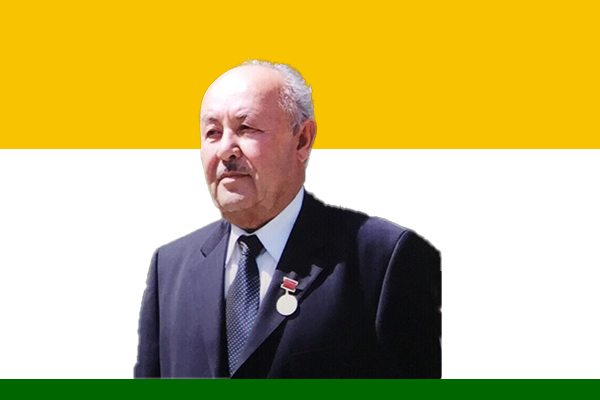
Mr. Izatullo Khayoyev
In Office: 25 June 1991 – 9 January 1992
Political Party: Communist
Home State: Kulob
Lifespan: 1936–2015
Country: Tajikistan
Image credits available here.
Early Life and Education
Izatullo Khayoyev was born into a society shaped by Soviet ideology and centralized planning. From an early stage, he showed strong administrative abilities and a clear interest in public service. Like many leaders of his generation, he received higher education within the Soviet system, focusing on economics, management, or public administration. His academic background prepared him for work in state institutions, where discipline, planning, and loyalty to the system were essential qualities.
Entry into Politics and Administration
Khayoyev began his career in regional and republican administration, gradually gaining recognition for his organizational skills. He worked within party and government structures, handling economic planning, industrial management, and agricultural coordination. His steady rise reflected the trust placed in him by senior leadership, as well as his ability to manage complex bureaucratic responsibilities. Over time, he became known as a practical administrator rather than a populist political figure.
Appointment as Prime Minister
Izatullo Khayoyev reached the peak of his political career when he assumed the position of Prime Minister of Tajikistan during the late Soviet era. At that time, the role involved overseeing the Council of Ministers and implementing policies shaped by the Communist Party. As Prime Minister, Khayoyev managed key sectors such as industry, agriculture, infrastructure, and social services. His leadership focused on maintaining stability while adapting to reforms introduced across the Soviet Union.
Leadership During a Period of Transition
Khayoyev’s tenure coincided with a challenging phase marked by economic stagnation and political uncertainty. Reforms introduced at the union level created pressure on republican governments to increase efficiency and transparency. As Prime Minister, Khayoyev worked to balance reform with continuity. He emphasized orderly governance, careful economic planning, and cooperation between central and regional authorities. His approach aimed to prevent disruption while responding to changing political realities.
Economic and Administrative Policies
Economic management remained a central responsibility of Khayoyev’s government. He oversaw production targets, resource allocation, and development programs within Tajikistan. Agriculture, particularly cotton production, played a major role in the republic’s economy, and Khayoyev supported policies designed to sustain output and employment. He also encouraged improvements in infrastructure and public services, recognizing their importance for long-term development and social stability.
Political Significance and Legacy
Izatullo Khayoyev’s legacy lies in his role as a transitional leader. He represented the final generation of Soviet-era prime ministers in Tajikistan, bridging the gap between centralized rule and the emergence of new political directions. While his leadership operated within strict institutional limits, it contributed to administrative continuity during uncertain times. His experience and governance style influenced how later leaders approached state management in the post-Soviet period.
Conclusion
Prime Minister Izatullo Khayoyev remains an important historical figure in Tajikistan’s political narrative. His service during a time of change highlights the challenges faced by leaders working within a transforming system. Through careful administration and a focus on stability, Khayoyev played a key role in guiding Tajikistan through the final chapter of the Soviet era, leaving a legacy tied to governance, responsibility, and transition.