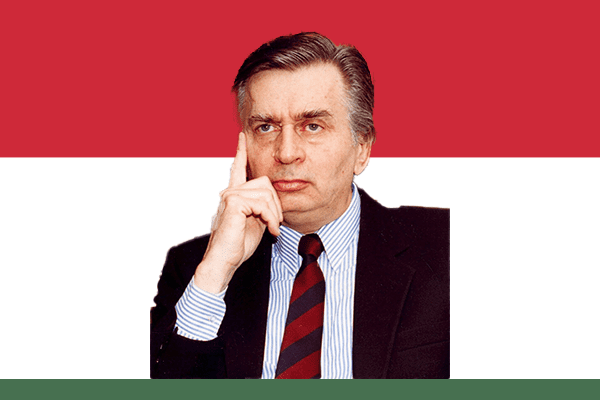
Early Life and Education
József Antall was born on April 8, 1932, in Budapest, Hungary, into a politically active and educated family. His father, József Antall Sr., worked as a government official and resisted Nazi influence during World War II. This background shaped Antall’s values and deepened his commitment to national independence and democracy.
Antall studied history and Hungarian literature at Eötvös Loránd University. He developed a strong academic interest in political history and later became a teacher and historian. Through his work in education, he actively promoted critical thinking and national awareness among students.
Political Awakening
During Hungary’s communist era, Antall did not remain passive. Instead, he quietly opposed authoritarian rule and supported reformist ideas. He avoided direct confrontation with the regime but maintained connections with intellectual circles that favored democratic change.
In the late 1980s, as communist power weakened across Eastern Europe, Antall stepped forward and joined the Hungarian Democratic Forum (MDF). He quickly emerged as a key leader due to his intellectual strength, calm demeanor, and clear vision for Hungary’s future.
Rise to Power
In 1990, Hungary held its first free elections after decades of communist rule. Antall led the MDF to victory and became Prime Minister. He did not inherit a stable system; instead, he took charge of a country facing economic crisis, political uncertainty, and institutional restructuring.
Antall actively worked to build democratic institutions, establish the rule of law, and introduce a market economy. He made decisive choices and took responsibility for guiding Hungary through a complex transition period.
Leadership and Reforms
As Prime Minister, Antall implemented significant political and economic reforms. He replaced centralized planning with market-based policies and encouraged private enterprise. He also strengthened Hungary’s foreign relations by moving the country closer to Western Europe.
Antall actively supported Hungary’s integration into European and transatlantic institutions. He built diplomatic ties and promoted cooperation with neighboring countries. Instead of isolating Hungary, he positioned it as an emerging democratic state in Europe.
His leadership style emphasized dialogue, patience, and strategic thinking. He addressed challenges directly and maintained stability during a time of uncertainty.
Challenges and Personal Struggles
Antall faced numerous challenges during his time in office. The transition to a market economy caused economic hardship for many citizens, leading to public dissatisfaction. Despite criticism, he continued to pursue reforms that he believed would benefit Hungary in the long term.
At the same time, Antall battled serious health issues. He suffered from cancer but continued to fulfill his duties as Prime Minister. Rather than stepping back, he remained committed to his role and worked tirelessly until his final days.
Legacy and Impact
József Antall left a lasting legacy as a leader who guided Hungary through one of its most critical historical transitions. He did not simply oversee change—he actively shaped it. His efforts helped establish democratic governance, economic reform, and international cooperation.
Many historians regard him as a key architect of modern Hungary. His vision and leadership ensured that Hungary moved away from authoritarian rule and toward a stable democratic future.
Conclusion
József Antall stands as a symbol of leadership during transformation. He acted decisively, embraced responsibility, and guided Hungary through a defining era. His contributions continue to influence Hungary’s political and economic landscape today.