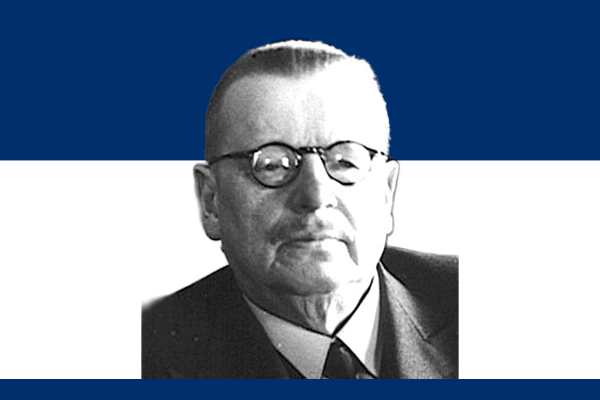
Mr. Juho Kusti Paasikivi
In Office: 17 November 1944 – 9 March 1946
Political Party: Finnish
Home State: Hämeenkoski
Lifespan: 1870–1956
Country: Finland
Image credits available here.
Early Life and Education
Juho Kusti Paasikivi was born on November 27, 1870, in Hämeenlinna, Finland. His original surname was Hellsten, but his family later changed it to Paasikivi. He lost his mother at an early age, and his father worked hard to support the family. Despite financial struggles, Paasikivi focused on education and achieved academic success.
He studied law and history at the University of Helsinki. During his university years, he developed strong nationalist ideas and became interested in Finnish culture and politics. His education helped him build the analytical skills that later strengthened his political career.
Political Career and Leadership
Paasikivi began his career as a lawyer, economist, and civil servant. He quickly gained respect for his intelligence and practical decision-making. In the early 1900s, he joined the Finnish Party and supported Finland’s autonomy while it remained under Russian rule.
After Finland declared independence in 1917, Paasikivi became one of the leading political figures in the country. He served as Prime Minister of Finland from 1918 to 1919 during a challenging period marked by the Finnish Civil War. He worked to restore stability and national unity after the conflict.
Throughout the 1920s and 1930s, Paasikivi held important positions in banking and diplomacy. He represented Finland in negotiations with foreign governments and gained valuable international experience.
Role During World War II
World War II placed Finland in a dangerous situation between powerful nations. Paasikivi played a critical role in diplomatic negotiations with the Soviet Union. During the Winter War and the Continuation War, he understood the importance of realistic foreign policy.
Instead of promoting unnecessary conflict, he encouraged practical solutions that protected Finland’s independence. After the war, he helped negotiate peace agreements with the Soviet Union. His diplomatic skills prevented harsher consequences for Finland and preserved the country’s sovereignty.
Presidency of Finland
In 1946, Juho Kusti Paasikivi became President of Finland. At that time, Finland faced economic difficulties, political uncertainty, and pressure from the Soviet Union. Paasikivi responded with calm leadership and strategic diplomacy.
He believed Finland should maintain friendly relations with the Soviet Union while protecting democracy and national independence. His foreign policy focused on realism, cooperation, and neutrality. Through careful diplomacy, he reduced tensions and improved Finland’s international standing.
Paasikivi also encouraged economic recovery and national reconstruction. Under his leadership, Finland rebuilt its economy and strengthened democratic institutions. He promoted stability rather than political extremism.
Paasikivi-Kekkonen Doctrine
One of Paasikivi’s greatest contributions was the foreign policy approach later called the “Paasikivi-Kekkonen doctrine.” This strategy emphasized peaceful cooperation with the Soviet Union and avoidance of unnecessary confrontation.
His successor, President Urho Kekkonen, continued this policy for many years. The doctrine helped Finland maintain independence during the Cold War while many other countries faced severe political tensions.
Legacy and Historical Importance
Juho Kusti Paasikivi remains one of Finland’s most respected leaders. His realistic approach to politics protected Finland during a dangerous period in European history. Instead of relying on emotional nationalism, he used diplomacy, intelligence, and practical judgment.
Historians often praise him for securing peace and stability after World War II. His leadership strengthened Finland’s democracy and international reputation. Streets, schools, and monuments in Finland continue to honor his memory.
Conclusion
Juho Kusti Paasikivi shaped Finland through wise leadership and diplomatic skill. He guided the nation during difficult years and ensured that Finland remained independent and democratic. His policies created stability and influenced Finnish foreign relations for generations. Today, he stands as a symbol of realism, responsibility, and national strength.