Mr. Karl Renner
In Office: 27 April 1945 – 20 December 1945
Political Party: Social Democratic Party
Home State: Dolní Dunajovice
Lifespan: 1870–1950
Country: Austria
Image credits available here.
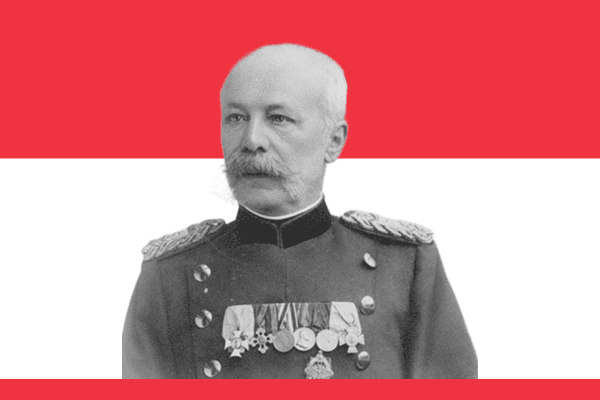
Early Life and Education
Karl Renner was born on December 14, 1870, in Unter-Tannowitz, Moravia, which was then part of the Austro-Hungarian Empire. He grew up in a poor farming family, but he worked hard in his studies and earned scholarships that allowed him to continue his education.
Renner studied law at the University of Vienna and developed a deep interest in politics and social issues. During his university years, he became involved with the Social Democratic movement. He believed that governments should protect workers’ rights and improve living conditions for ordinary people.
Political Career and Rise to Leadership
Karl Renner quickly became a leading figure in Austrian politics. He joined the Social Democratic Workers’ Party and gained recognition for his intelligence and legal knowledge. He wrote several important works about democracy, nationalism, and federalism.
After the collapse of the Austro-Hungarian Empire in 1918, Austria faced political and economic chaos. Renner took charge during this difficult time and became the first Chancellor of the newly formed Republic of Austria. He helped establish democratic institutions and worked to create stability in the country.
Renner also played a key role in negotiating the Treaty of Saint-Germain in 1919. Although the treaty imposed harsh conditions on Austria, he tried to secure the best possible future for the nation.
Contributions to Austrian Democracy
Karl Renner strongly defended parliamentary democracy and constitutional government. He encouraged cooperation between political groups and promoted peaceful solutions to conflicts. His legal expertise helped Austria build a modern constitutional framework.
During the early years of the republic, Renner focused on economic recovery and social reforms. He supported workers’ protections, education reforms, and social welfare programs. His efforts improved conditions for many Austrian citizens.
Renner believed that democracy could only survive when leaders respected dialogue and compromise. He often acted as a mediator during political disagreements and tried to maintain national unity.
Challenges During the Nazi Era
Austria experienced major political turmoil during the 1930s. Authoritarian governments weakened democratic institutions, and political tensions increased across Europe. In 1938, Nazi Germany annexed Austria in an event known as the Anschluss.
During this period, Renner largely withdrew from active politics. However, he remained an influential public figure and closely observed the dramatic changes affecting Austria and Europe.
President of Austria After World War II
After World War II ended in 1945, Austria needed strong leadership to rebuild the country. Karl Renner returned to politics and helped restore Austrian independence and democratic governance. He became the first President of the Second Austrian Republic in 1945.
As president, Renner worked closely with different political parties to rebuild national institutions. He encouraged unity among Austrians and promoted peaceful cooperation after years of war and dictatorship. His leadership helped stabilize Austria during a challenging transition period.
Renner also supported Austria’s reconstruction efforts and strengthened relations with Allied powers. His diplomatic approach helped Austria regain international respect.
Legacy and Historical Importance
Karl Renner remains one of the most significant figures in Austrian political history. He guided Austria through two critical periods: the creation of the First Republic after World War I and the rebuilding of the nation after World War II.
Historians recognize him for his dedication to democracy, constitutional law, and social reform. His ability to cooperate with different political groups allowed Austria to recover from instability and conflict.
Although some of his political decisions remain debated, Renner’s contributions to Austrian statehood and democratic development continue to shape the country’s history.
Conclusion
Karl Renner devoted his life to public service and democratic values. Through active leadership, political negotiation, and legal expertise, he helped Austria survive some of the most difficult moments in its history. His work as chancellor and president laid the foundation for modern democratic Austria and secured his place as a respected national leader.