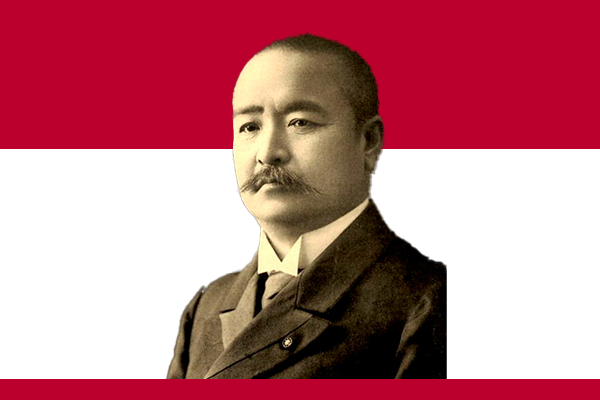
Early Life and Military Career
Katsura Tarō was born on January 4, 1848, in Hagi, Chōshū Domain (present-day Yamaguchi Prefecture). Coming from a samurai family, he received training in military tactics and embraced modern education influenced by Western systems. He joined the Chōshū army and participated in the Boshin War (1868–1869), which ended the Tokugawa shogunate and restored imperial rule under Emperor Meiji.
Katsura traveled to Germany in 1875 to study military science. He observed Western military strategies, administration, and political systems. When he returned to Japan, he applied his knowledge to modernize the Imperial Japanese Army and strengthen Japan’s defense systems.
Rise in Government and Politics
Katsura entered politics after establishing a distinguished military career. He served as Vice Minister of War and later became Minister of War in 1898. His reforms improved military training, introduced advanced technologies, and strengthened Japan’s defense industry.
Katsura also represented Japan in international negotiations. He played a vital role in discussions following the First Sino-Japanese War (1894–1895) and supported Japan’s growing influence in East Asia. His military expertise and diplomatic skills gained him respect from both political leaders and the emperor.
First Term as Prime Minister (1901–1906)
Katsura Tarō became Prime Minister in 1901 and initiated significant political, economic, and military reforms. He improved Japan’s infrastructure, encouraged industrialization, and strengthened parliamentary institutions. Under his leadership, Japan fought and won the Russo-Japanese War (1904–1905), securing Korea and parts of Manchuria.
The victory astonished the world, marking Japan as the first Asian power to defeat a major European nation. Katsura negotiated the Treaty of Portsmouth in 1905 with U.S. President Theodore Roosevelt’s mediation, securing Japan’s gains while avoiding overextension.
Second Term as Prime Minister (1908–1911)
Katsura returned as Prime Minister in 1908. He introduced social and economic reforms to modernize Japan further. He expanded railways, improved education, and promoted industrial growth. During this term, Japan annexed Korea in 1910, strengthening its empire but also facing criticism for imperialist policies.
Katsura also signed the 1911 treaty with the United States and Britain, ending unequal treaties imposed on Japan in the 19th century. This achievement restored Japan’s full sovereignty and elevated its status among world powers.
Third Term as Prime Minister (1912–1913)
Katsura assumed office for the third time in 1912 after the death of Emperor Meiji. However, political opposition intensified as parties demanded greater parliamentary control over government policies. The “Taishō Political Crisis” erupted, and Katsura resigned in 1913 after losing public and political support.
Legacy and Contributions
Katsura Tarō passed away on October 10, 1913. People remember him as a leader who combined military strength, political reforms, and diplomacy to transform Japan into a modern power. His role in winning the Russo-Japanese War and ending unequal treaties reshaped Japan’s international position.
Conclusion
Prime Minister Katsura Tarō guided Japan through modernization, military victories, and diplomatic successes. His leadership bridged Japan’s feudal past with its emergence as a modern world power, leaving a legacy of reform, strength, and national pride.