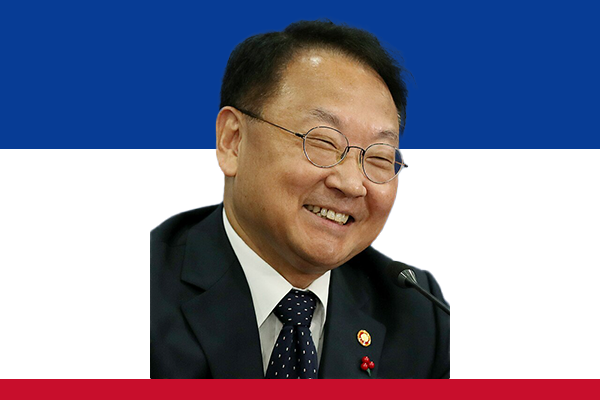
Mr. Kim Boo-kyum
In Office: 14 May 2021 – 11 May 2022
Political Party: Democratic
Home State: Jinan
Lifespan: born 1958
Country: South Korea
Image credits available here.
Early Life and Education
Kim Boo-kyum was born on January 21, 1958, in Sangju, North Gyeongsang Province. He grew up in a rural environment that shaped his understanding of everyday struggles faced by ordinary citizens. He pursued higher education at Seoul National University, where he studied political science. During his university years, he actively participated in pro-democracy activism, which later influenced his reformist approach to politics. His early experiences helped him develop a strong commitment to social justice, democratic rights, and transparent governance.
Entry into Politics and Rise as a Reformist
Kim entered national politics with a determination to challenge regionalism—a major dividing force in South Korean political culture. He joined the Democratic Party and emerged as one of the most vocal reformists of his generation. Unlike many other politicians from the conservative-leaning Gyeongsang region, he openly opposed regional polarization and encouraged national unity. His message resonated with younger voters and civil society groups who demanded a more equitable political landscape.
Throughout his political career, Kim ran for various constituencies, sometimes outside his home region, to prove that political identity should not be tied to birthplace. He gained national attention when he won a seat in Daegu, a stronghold of conservative politics. This victory made him one of the few liberal politicians to break regional barriers, earning him a reputation as a unifying figure.
Roles in Government Before Becoming Prime Minister
Before assuming the office of Prime Minister, Kim held several important positions. He served multiple terms as a member of the National Assembly, where he focused on social welfare, political transparency, and public safety. President Moon Jae-in later appointed him as Minister of the Interior and Safety. In this role, Kim strengthened national disaster management systems, improved coordination between government bodies, and promoted safer public infrastructure. His ability to communicate effectively during crises helped him build public trust.
Appointment as Prime Minister
President Moon Jae-in nominated Kim Boo-kyum as Prime Minister in May 2021. After the National Assembly confirmed his appointment, he became the country’s second Prime Minister under the Moon administration. Kim accepted the position during a politically sensitive time, marked by public pressure for government accountability and responses to socioeconomic challenges.
Leadership Approach and National Challenges
As Prime Minister, Kim adopted a calm, empathetic, and communicative style. He prioritized national unity and consistently emphasized cooperation across political lines. He worked to rebuild public trust in government institutions by holding honest conversations with citizens and stakeholders. During his tenure, South Korea faced the continuing impact of the COVID-19 pandemic. Kim coordinated nationwide preventive measures, expanded vaccination programs, and ensured transparent communication about health risks and policies.
He also addressed issues such as housing affordability, economic recovery, and youth unemployment. He encouraged ministries to adopt realistic solutions that supported vulnerable populations. His leadership reflected his long-held belief in fairness, inclusiveness, and responsible governance.
Legacy and Public Image
Kim Boo-kyum left office in May 2022 when a new administration took power. Many South Koreans remember him as a politician who bridged regional divides and upheld principles of integrity. He maintained a moderate tone in a sharply polarized political environment and consistently advocated unity over division. His legacy stands as an example of how empathy and reform-minded determination can shape national leadership.