Mr. Moon Jae-in
In Office: 10 May 2017 – 9 May 2022
Political Party: Democratic
Home State: Geoje
Lifespan: born 1953
Country: South Korea
Image credits available here.
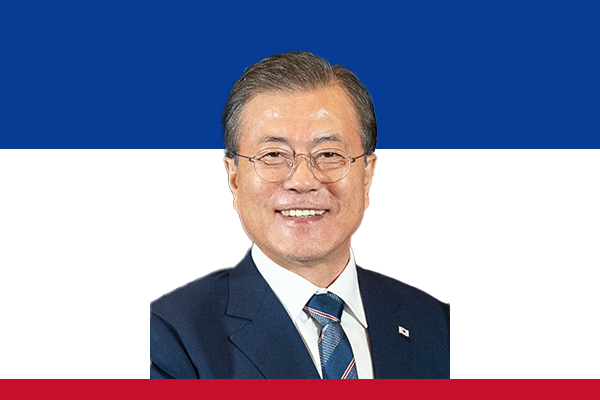
Early Life and Formative Years
Moon Jae-in entered the world on January 24, 1953, in Geoje, South Korea, to parents who had fled North Korea during the Korean War. His family struggled with poverty, but he embraced education as a path toward opportunity. He studied law at Kyung Hee University and joined the pro-democracy movement when the military regime restricted academic freedom. Authorities arrested him for his activism, but the experience strengthened his belief in civil liberties. After completing compulsory military service, he passed the bar exam and began a legal career focused on human rights.
Rise as a Human Rights Lawyer and Political Figure
Moon partnered with lawyer Roh Moo-hyun to defend workers, students, and marginalized groups. Their collaboration built a reputation for integrity and public service. Moon entered national politics when Roh became a presidential candidate. He served as Roh’s chief presidential secretary and shaped policies that emphasized transparency and democratic reforms. After Roh’s death, Moon emerged as one of his closest political heirs and carried forward his reformist agenda. He officially entered the National Assembly and strengthened his public presence by advocating for fairness, justice, and social equality.
Road to the Presidency
Moon ran for president in 2012 but narrowly lost. He accepted the result and continued grassroots work within the Democratic Party. When corruption scandals brought down President Park Geun-hye in 2017, Moon positioned himself as the candidate of change, honesty, and accountability. South Koreans voted overwhelmingly for him, and he took office on May 10, 2017. He pledged to build a “people-centered government,” create new jobs, reduce inequality, and restore trust in democratic institutions.
Domestic Reforms and Policy Actions
Moon launched major reforms immediately after taking office. He expanded welfare programs, raised the minimum wage, and invested in renewable energy to reduce reliance on nuclear power. His administration introduced labor reforms that improved worker protections and reduced excessive working hours. He strengthened oversight of powerful business conglomerates, known as chaebols, to promote fairness in the economy. Moon also fought corruption by supporting independent investigations and transparent governance.
He increased government support for education, healthcare, and digital innovation. His administration confronted economic challenges, including youth unemployment and housing affordability, by creating technological hubs and housing policies. Although critics argued that some measures created economic pressure, Moon remained committed to social justice and long-term reform.
Diplomacy and Korean Peninsula Peace Efforts
Moon made Korean Peninsula peace a core mission of his presidency. He held historic summits with North Korean leader Kim Jong-un in 2018 and facilitated dialogue between North Korea and the United States. Moon pushed for denuclearization through cooperation, trust-building, and economic integration. He improved relations with China and Japan despite political tensions and strengthened the alliance with the United States. His administration also expanded South Korea’s global influence by promoting climate action, humanitarian aid, and multilateral diplomacy.
COVID-19 Response and National Leadership
During the COVID-19 pandemic, Moon led an aggressive, science-based public health response. South Korea implemented widespread testing, contact tracing, and transparent communication, earning international praise. Moon supported businesses and households through relief packages and digital-service expansions.
Legacy and Impact
Moon Jae-in left office in 2022 with a reputation as a leader who championed democracy, welfare, and diplomacy. He expanded social protections, strengthened Korea’s international standing, and advanced efforts toward peace on the peninsula. His legacy continues to influence Korean politics, especially in debates on fairness, reform, and national reconciliation.