Mr. Kubatbek Boronov
In Office: 17 June 2020 – 6 October 2020
Political Party: Independent
Home State: Bishkek
Lifespan: born 1964
Country: Kyrgyzstan
Image credits available here.
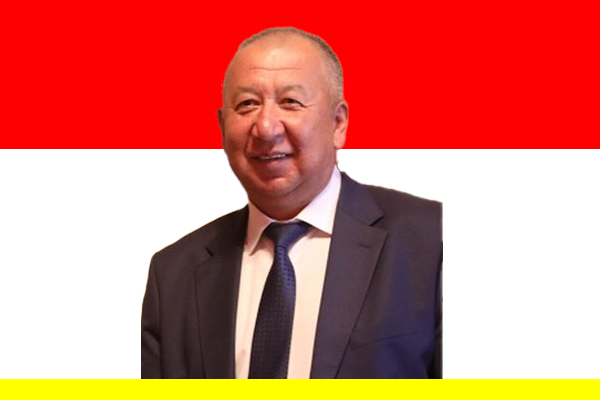
Early Life and Education
Kubatbek Boronov was born on December 31, 1969, in the Osh region of southern Kyrgyzstan. He pursued higher education in engineering and management, fields that later shaped his pragmatic and administrative approach to governance. Before entering high-level politics, Boronov built a career in public administration, gaining experience in both regional and national government structures.
Career in Public Administration
Before becoming Prime Minister, Boronov held several important government positions. He served as the Governor (Plenipotentiary Representative) of the Osh Region, where he managed regional development, infrastructure projects, and local governance issues. His performance in regional administration earned him recognition as a capable and disciplined official.
In 2018, Boronov was appointed as the First Deputy Prime Minister of Kyrgyzstan. In this role, he oversaw key sectors including the economy, transport, and emergency situations. His background in administration made him a reliable figure within the executive branch, especially during periods requiring coordination between ministries.
Appointment as Prime Minister
Kubatbek Boronov was appointed Prime Minister on June 17, 2020, following the resignation of Mukhammedkaly Abylgaziev. His appointment was approved by the Jogorku Kenesh (Parliament of Kyrgyzstan). At the time, the country faced mounting pressure from the COVID-19 pandemic, economic slowdown, and public dissatisfaction with political leadership.
Boronov was seen as a technocratic choice rather than a populist leader. His selection aimed to ensure continuity, administrative stability, and a focused response to the health and economic crises affecting the country.
Leadership During the COVID-19 Pandemic
The defining feature of Boronov’s premiership was the management of the COVID-19 crisis. Kyrgyzstan experienced severe strain on its healthcare system during mid-2020. Boronov’s government prioritized emergency healthcare funding, coordination with international partners, and logistical support for medical facilities.
His administration also worked to mitigate the economic impact of lockdowns by supporting small businesses, stabilizing food supplies, and managing state finances during declining revenues. While the challenges were immense, Boronov maintained a calm and administrative style, emphasizing collective responsibility and institutional coordination.
Political Challenges and Resignation
Despite his efforts, Boronov’s tenure was overshadowed by broader political instability. In October 2020, parliamentary elections triggered mass protests across Kyrgyzstan over alleged irregularities. The unrest led to rapid changes in government and the eventual resignation of Boronov on October 6, 2020.
His resignation was part of a wider collapse of the political leadership rather than a direct rejection of his personal performance. Boronov stepped down to prevent further escalation of tensions and to allow for the formation of a new government during the crisis.
Legacy and Significance
Although Kubatbek Boronov served as Prime Minister for only a few months, his leadership period remains significant due to the extraordinary circumstances he faced. He is often remembered as a crisis-time administrator who prioritized stability, governance continuity, and public health over political ambition.
Boronov’s tenure highlights the challenges faced by technocratic leaders in politically volatile environments. His role underscores the importance of administrative competence during emergencies, even when broader political forces ultimately shape a leader’s duration in office.