Early Life and Education
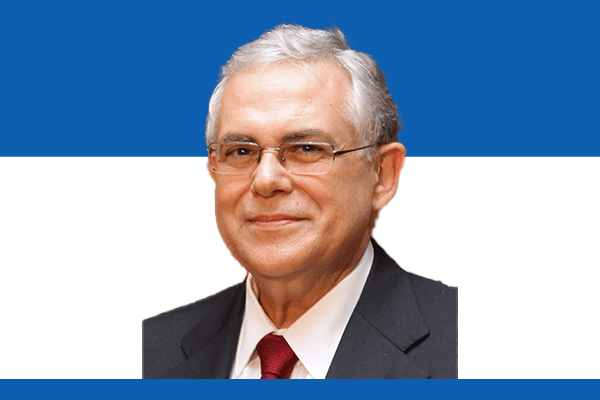
Lucas Papademos was born on October 11, 1947, in, Athens Greece. He pursued higher education with determination and focus. He studied physics at the Massachusetts Institute of Technology (MIT), where he earned his bachelor’s degree. He continued at MIT to complete a master’s degree in electrical engineering and later obtained a PhD in economics.
He built a strong academic foundation by combining scientific discipline with economic theory. This diverse educational background shaped his analytical approach to economic challenges and policymaking.
Academic and Professional Career
Papademos began his career as an academic, teaching economics at Columbia University. He contributed significantly to research in macroeconomics and monetary policy. His work earned respect in both academic and financial circles.
He later returned to Greece and took on key roles in the Bank of Greece. As Governor of the Bank of Greece from 1994 to 2002, he played a central role in preparing Greece for entry into the Eurozone. He actively supported policies that aligned the Greek economy with European standards.
Afterward, he served as Vice President of the European Central Bank from 2002 to 2010. In this role, he helped shape monetary policy for the Eurozone and contributed to maintaining financial stability across member states.
Prime Minister of Greece
In 2011, Greece faced a severe debt crisis that threatened its economic stability and position in the Eurozone. During this critical period, Lucas Papademos became Prime Minister of Greece as part of a transitional government.
He took decisive action to implement economic reforms and negotiate financial support from international lenders, including the European Union and the International Monetary Fund. He worked closely with European leaders to secure bailout agreements and stabilize the Greek economy.
Rather than relying on political rhetoric, Papademos focused on practical solutions. He promoted fiscal discipline, structural reforms, and cooperation with international partners. His leadership helped Greece avoid immediate financial collapse and maintain its position within the Eurozone.
Leadership Style and Challenges
Papademos led with a technocratic and pragmatic approach. He relied on expertise and data-driven decisions instead of political ideology. This approach earned him credibility among international institutions but also drew criticism from segments of the Greek public who opposed austerity measures.
He faced intense pressure as he balanced domestic concerns with international expectations. Despite these challenges, he maintained a steady focus on economic recovery and long-term stability.
Later Life and Legacy
After completing his term as Prime Minister in 2012, Papademos remained active in academic and policy discussions. He continued to contribute to economic thought and advise on financial matters.
His legacy centers on his role in steering Greece through a critical economic crisis. He demonstrated how expertise and calm leadership can guide a nation during uncertainty. His contributions to European monetary policy also remain significant.
Conclusion
Lucas Papademos stands out as a key figure in modern Greek economic history. Through active leadership and informed decision-making, he helped Greece navigate one of its most difficult periods. His work reflects dedication to stability, reform, and international cooperation.