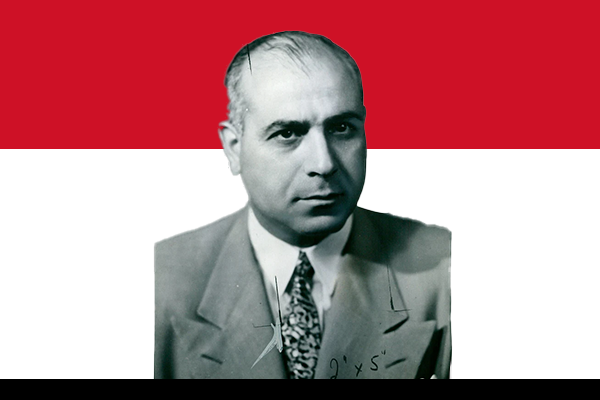
Early Life and Education
Maamun al-Kuzbari was born in Damascus into a well-known family that valued education and public service. From an early age, he showed strong academic ability, particularly in law and political thought. He pursued higher education in legal studies and developed a deep understanding of constitutional law, international relations, and governance. His academic background later became a defining feature of his political career, setting him apart as a leader who relied on legal reasoning rather than populist rhetoric.
Entry into Public Life
Al-Kuzbari began his career in public service as a legal expert and academic. He taught law and contributed to intellectual discussions on constitutional development in Syria and the broader Arab world. His reputation as a respected jurist led to his involvement in government advisory roles. Over time, he became increasingly active in politics, especially during moments when Syria required experienced administrators to navigate constitutional crises and transitions of power.
Role as Prime Minister
Maamun al-Kuzbari served as Prime Minister of Syria during the early 1950s, a time characterized by fragile democratic institutions and intense political competition. His appointment reflected a desire among Syrian political elites to bring stability through legal expertise and moderation. As Prime Minister, al-Kuzbari focused on maintaining administrative continuity, managing internal political tensions, and upholding constitutional procedures.
Although his tenure was relatively short, it occurred during a critical phase in Syria’s post-independence history. Governments rose and fell rapidly, often under pressure from military influence and ideological divisions. Al-Kuzbari attempted to balance civilian authority with the realities of power politics, emphasizing legality and institutional order. His leadership style was cautious and pragmatic, shaped by his belief that Syria’s long-term stability depended on respect for law rather than force.
Contributions to Constitutional and Legal Thought
Beyond his role as Prime Minister, al-Kuzbari made lasting contributions as a constitutional scholar. He participated in constitutional debates and was involved in drafting and interpreting legal frameworks for governance. His writings and teachings reflected a strong commitment to parliamentary principles, civil rights, and national sovereignty. He viewed the constitution not merely as a political document but as the foundation of social and political harmony.
Diplomatic and Academic Influence
Al-Kuzbari also represented Syria in diplomatic and international settings, where his legal knowledge and eloquence earned respect. He engaged with regional and global discussions on law and governance, helping to present Syria as a state committed to international norms. At the same time, he remained active in academic circles, mentoring students and contributing to legal education in Syria.
Legacy and Historical Significance
Maamun al-Kuzbari’s legacy lies in his dedication to constitutionalism and legal governance during one of Syria’s most turbulent eras. While he did not rule for long or leave behind sweeping political reforms, his career symbolizes the struggle of civilian leaders to preserve democratic principles amid instability. Historians remember him as a thoughtful, principled figure who sought to guide Syria through reason, law, and dialogue rather than coercion.