Mr. Maktoum bin Rashid Al Maktoum
In Office: 9 December 1971 – 30 April 1979
7 October 1990 – 4 January 2006
Political Party: Emblem of the United Arab Emirates
Home State: Dubai
Lifespan: 1943–2006
Country: United Arab Emirates
Image credits available here.
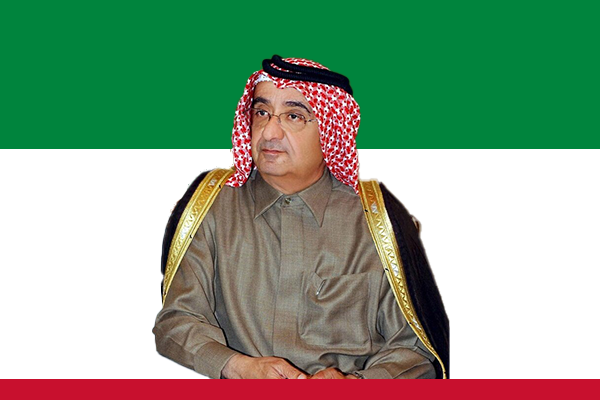
Early Life and Education
Maktoum bin Rashid Al Maktoum was born in 1943 into the ruling Al Maktoum family of Dubai. He was the eldest son of Sheikh Rashid bin Saeed Al Maktoum, the visionary ruler who laid the foundations of modern Dubai. From an early age, Sheikh Maktoum received an education that combined traditional Islamic studies with modern academic learning. This balanced upbringing helped shape his broad worldview and prepared him for leadership in a rapidly changing region.
His early exposure to governance came through close association with his father, allowing him to understand administration, diplomacy, and economic planning at a young age.
Rise to Leadership
Sheikh Maktoum assumed the role of Ruler of Dubai in 1990 following the death of his father. His accession came at a critical time when Dubai was expanding beyond its traditional trading roots. In 1995, he was appointed Vice President and Prime Minister of the United Arab Emirates, positions that placed him at the heart of federal decision-making.
As Prime Minister, he worked closely with other UAE leaders to strengthen the federation, maintain political harmony among the emirates, and promote collective national development.
Role as Prime Minister of the UAE
During his tenure as Prime Minister, Maktoum bin Rashid Al Maktoum emphasized stability, consultation, and continuity. He supported federal institutions and encouraged cooperation between emirates to ensure balanced growth. His leadership style was marked by discretion rather than public visibility, preferring effective governance over personal prominence.
He oversaw important developments in public administration and supported reforms that improved efficiency within government structures, helping the UAE adapt to globalization and economic diversification.
Contributions to Dubai’s Development
As Ruler of Dubai, Sheikh Maktoum continued the ambitious development strategy initiated by his father. He supported large-scale infrastructure projects, expansion of ports, and the growth of free zones that attracted international investment. Under his leadership, Dubai strengthened its position as a regional hub for commerce, aviation, and tourism.
He also entrusted key responsibilities to the next generation of leaders, notably Sheikh Mohammed bin Rashid Al Maktoum, ensuring continuity and long-term planning in governance.
Cultural and Literary Interests
Beyond politics, Sheikh Maktoum was widely respected as a man of culture and intellect. He was an accomplished poet and a strong patron of Arabic literature. His poetry reflected themes of wisdom, leadership, and human values, earning admiration across the Arab world.
He believed that cultural identity and heritage were essential foundations for national progress, and he supported initiatives that preserved Emirati traditions while embracing modernity.
Legacy and Historical Significance
Maktoum bin Rashid Al Maktoum passed away in 2006, marking the end of an era in UAE leadership. His legacy lies in his steady guidance during a period of transformation and his commitment to unity, development, and cultural pride. As Prime Minister and Ruler of Dubai, he helped shape a nation confident in its identity and ambitious in its vision for the future.