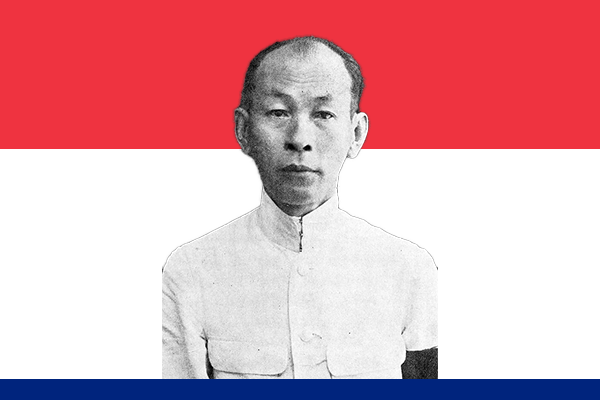
Early Life and Legal Background
Manopakorn Nitithada emerged as a respected legal mind in Siam (modern-day Thailand) during a time of profound political change. He built his reputation through dedication to law, justice, and public service. His legal training shaped his calm temperament and methodical approach to governance. Before entering national leadership, he served in judicial and advisory roles, where he earned trust as a neutral and principled figure. These qualities later positioned him as a suitable leader during a sensitive political transition.
Rise to Power After the 1932 Revolution
In 1932, Siam experienced a bloodless revolution that ended absolute monarchy and introduced a constitutional system. Amid uncertainty and competing political forces, leaders sought a prime minister who could stabilize the country and command respect across factions. Manopakorn Nitithada accepted this responsibility and became the first Prime Minister of constitutional Siam. He stepped into office not as a revolutionary firebrand but as a cautious administrator determined to ensure continuity and order.
Leadership Style and Governance Approach
Manopakorn Nitithada governed with moderation and restraint. He emphasized legal processes, administrative discipline, and gradual reform. Rather than pursuing radical change, he focused on consolidating the new constitutional framework. His leadership aimed to balance the interests of the monarchy, the military, and civilian reformers. By doing so, he tried to prevent conflict and preserve national unity during a fragile period.
Constitutional Reforms and Administrative Policies
As prime minister, Manopakorn Nitithada worked to implement the provisional constitution and later supported the drafting of a permanent constitution. He prioritized establishing lawful governance and institutional stability. His administration promoted bureaucratic efficiency and sought to maintain public confidence in the new political order. Although his reforms moved slowly, they reflected his belief that durable change required patience and consensus rather than haste.
Challenges and Political Opposition
Despite his cautious approach, Manopakorn Nitithada faced mounting opposition. Younger revolutionary leaders and military officers criticized him for resisting rapid reforms. They viewed his legalistic methods as obstacles to progress. Tensions intensified as political factions competed for influence. In response, he took controversial measures, including suspending parts of the constitution to curb unrest. These actions, though intended to restore stability, weakened his support and fueled criticism.
Removal from Office
Political pressure eventually forced Manopakorn Nitithada out of power in 1933. His opponents accused him of undermining democratic principles, while his supporters argued that he acted to protect the nation from chaos. His removal marked a shift toward stronger military influence in Thai politics. This transition highlighted the difficulty of maintaining civilian-led governance during the early constitutional period.
Legacy and Historical Significance
Manopakorn Nitithada left a complex legacy. He did not rule for long, but he shaped Thailand’s first experience with constitutional government. His tenure demonstrated the challenges of transforming political systems without destabilizing society. Historians remember him as a conservative yet sincere leader who valued law and order above personal ambition. His premiership set important precedents, even as later governments moved in different directions.
Conclusion
Prime Minister Manopakorn Nitithada guided Thailand through a critical transitional moment. He led with caution, legal integrity, and a commitment to stability. Although political forces eventually sidelined him, his role as the first prime minister of constitutional Thailand remains historically significant. His leadership illustrates both the promise and the difficulty of peaceful political transformation.