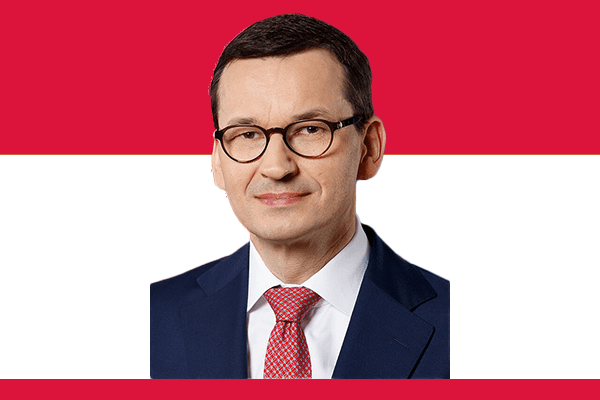
Early Life and Education
Mateusz Jakub Morawiecki was born on June 20, 1968, in Wrocław, Poland. He grew up in a patriotic family that strongly opposed communist rule. His father, Kornel Morawiecki, was a respected anti-communist activist and politician. This family background deeply influenced Mateusz’s political thinking and values. He became interested in public life and national affairs at a young age.
Morawiecki studied history at the University of Wrocław. Later, he continued his education in business and economics, attending prestigious institutions and training programs in Poland and abroad. His academic journey gave him strong knowledge in finance, management, and public policy, which later helped him in both banking and government service.
Career Before Politics
Before entering top-level politics, Mateusz Morawiecki built a successful career in banking and finance. He worked for Bank Zachodni WBK, one of Poland’s major banks, and eventually became its chairman. During his banking career, he earned a reputation as a skilled manager and economic strategist. He understood financial systems, investment planning, and economic reform, which made him stand out among future political leaders.
His success in the private sector gave him credibility when he later joined government. Many supporters believed that his business experience would help Poland achieve stable growth and modernization.
Political Rise
Mateusz Morawiecki formally entered national politics in 2015 when he joined the government of Prime Minister Beata Szydło. He served as Deputy Prime Minister and Minister of Development, and later also became Minister of Finance. In these roles, he promoted economic reforms, investment programs, and stronger tax collection policies. He aimed to reduce fraud, increase state revenues, and support Polish industry.
In December 2017, the ruling Law and Justice Party selected him to replace Beata Szydło as Prime Minister. As prime minister, he combined economic planning with conservative political values. He supported social spending programs, including child benefits and welfare measures, while also promoting infrastructure, business growth, and energy security.
Leadership as Prime Minister
As Prime Minister, Morawiecki led Poland through many important events. He managed the country during the COVID-19 pandemic, the economic disruptions that followed, and the regional security crisis caused by Russia’s invasion of Ukraine in 2022. His government supported Ukraine strongly and welcomed millions of refugees into Poland. This response earned international attention and praise.
Domestically, he continued policies that emphasized family support, national identity, and state-led economic development. His government invested in roads, digital projects, defense, and public services. However, critics accused his administration of weakening judicial independence, increasing political polarization, and creating tensions with the European Union over rule-of-law issues.
Legacy and Importance
Mateusz Morawiecki remains an important figure in Polish politics. Supporters praise him for strengthening the economy, protecting national interests, and expanding social benefits. Critics argue that his government deepened divisions and challenged democratic institutions. Even so, his years in office left a strong mark on Poland’s modern history.
Morawiecki’s career shows how a leader can move from banking to national leadership and influence both economic and political life. His role as Prime Minister made him one of the defining political personalities of contemporary Poland.