Mr. Meles Zenawi
In Office: 23 August 1995 – 20 August 2012
Political Party: Independent
Home State: Addis Ababa
Lifespan: 1955–2012
Country: Ethiopia
Image credits available here.
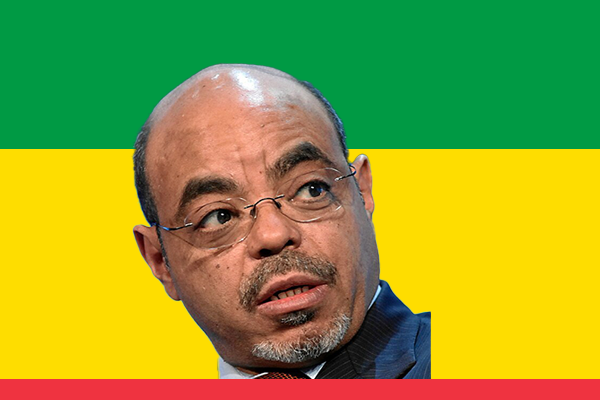
Early Life and Education
Meles Zenawi Wogderess was born on May 8, 1955, in Adwa, Tigray, Ethiopia. He grew up in a modest family that valued education and discipline. Meles attended the General Wingate Secondary School in Addis Ababa, where his academic brilliance became evident. He later studied medicine at Addis Ababa University but left before completing his degree to join the armed struggle against the Derg regime. His early exposure to poverty and political instability shaped his determination to rebuild Ethiopia.
Entry into the Liberation Movement
In the mid-1970s, Meles joined the Tigray People’s Liberation Front (TPLF), a movement fighting against the Marxist Derg government. He quickly rose through the ranks due to his intellect, organizational skills, and strong ideological commitment. Meles helped unify various rebel groups and played a leading role in forming the Ethiopian People’s Revolutionary Democratic Front (EPRDF) in 1989. Under his leadership, the EPRDF led a successful military campaign that ended the Derg dictatorship in 1991.
Rise to Political Leadership
After the fall of the Derg regime, Meles became the acting President of the Transitional Government of Ethiopia. He guided the country toward stability and reconstruction after years of civil war. In 1995, when Ethiopia adopted a new constitution and established a federal democratic republic, Meles became the nation’s first elected Prime Minister. His leadership marked a turning point in Ethiopia’s political and economic direction.
Economic Reforms and Development Vision
As Prime Minister, Meles focused on transforming Ethiopia’s economy. He introduced a developmental state model that emphasized infrastructure, agriculture, and education. He encouraged industrialization while keeping the government actively involved in planning and regulation. Meles prioritized rural development by investing in irrigation, agricultural technology, and roads. These efforts improved food security and boosted economic growth. Under his leadership, Ethiopia achieved some of the fastest growth rates in Africa.
Focus on Education and Health
Meles strongly believed that development depended on human capital. He expanded access to education by building schools and universities across the country. His government also worked to improve healthcare, launching programs to fight diseases like malaria and HIV/AIDS. By empowering women and supporting community health workers, Meles built a more inclusive social system that reached millions of Ethiopians.
Role in Regional and International Affairs
Meles played a vital role in promoting peace and cooperation in Africa. He helped mediate regional conflicts and represented Africa in international forums on climate change and economic policy. As a skilled negotiator, he advocated for Africa’s voice in global development discussions. He also strengthened Ethiopia’s relationships with major world powers while maintaining independence in decision-making.
Challenges and Criticism
Despite his achievements, Meles faced criticism for his government’s restrictions on opposition parties and media freedom. Critics accused him of centralizing power, while supporters argued that his strong leadership was essential for maintaining stability in a diverse and developing nation. Meles balanced these pressures by defending his developmental approach as a model suited to Ethiopia’s unique context.
Death and Legacy
Meles Zenawi passed away on August 20, 2012, in Brussels, Belgium, after a short illness. His death marked the end of an era in Ethiopian politics. Millions mourned his passing, recognizing him as a leader who transformed Ethiopia’s image from a famine-stricken nation to a rising African power.
Conclusion
Prime Minister Meles Zenawi Wogderess left a lasting impact on Ethiopia’s political and economic landscape. His leadership combined visionary planning, commitment to growth, and dedication to social development. Though his governance style sparked debate, his legacy as a reformer and nation-builder remains central to Ethiopia’s modern history.