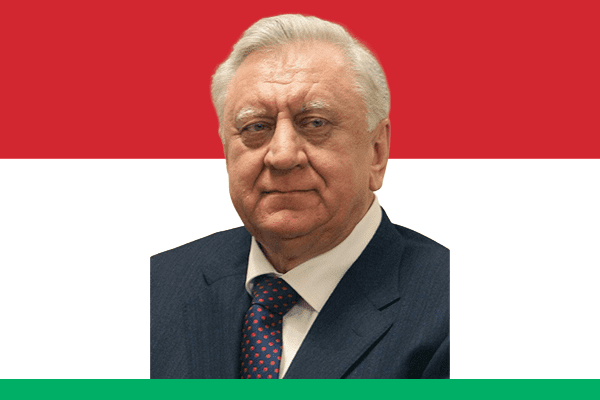
Early Life and Education
Mikhail Myasnikovich was born on May 6, 1950, in the Minsk region of Belarus, which was then part of the Soviet Union. He grew up during a period of rapid industrial and social transformation. From an early age, he showed strong interest in engineering and public administration.
He completed his education at the Brest Civil Engineering Institute, where he studied engineering and construction management. His technical background helped him develop practical problem-solving skills and prepared him for leadership roles in government and economic planning.
Beginning of Political Career
Mikhail Myasnikovich began his professional career in the construction and engineering sector. He worked in various administrative and technical positions, gaining experience in management and regional development. His dedication and organizational skills quickly earned recognition from political leaders.
During the Soviet era, he joined the Communist Party and became actively involved in public administration. After Belarus gained independence in 1991, he continued serving the country through different government institutions. His ability to manage economic and administrative issues made him one of the trusted political figures in Belarus.
Role in the Belarusian Government
Throughout the 1990s and early 2000s, Myasnikovich held several senior positions in the Belarusian government. He served as Head of the Presidential Administration and later worked in scientific and economic organizations. In these positions, he helped design policies that supported industrial development, infrastructure growth, and state management reforms.
In 2010, President Alexander Lukashenko appointed him as Prime Minister of Belarus. As Prime Minister, Myasnikovich focused on economic modernization, trade expansion, and cooperation with neighboring countries. He encouraged investment in industry and agriculture while supporting state-controlled economic policies.
He also worked to strengthen Belarus’s participation in regional organizations, including economic partnerships with Russia and other post-Soviet states. His government promoted stability and economic coordination during challenging international conditions.
Leadership Style and Achievements
Mikhail Myasnikovich gained a reputation as a calm and experienced administrator. He preferred practical decision-making and emphasized long-term planning. Instead of creating dramatic political changes, he concentrated on maintaining economic stability and improving government efficiency.
During his leadership, Belarus expanded infrastructure projects and strengthened industrial production. He supported scientific innovation and educational development, recognizing their importance for national progress. His experience in engineering and economics allowed him to approach governance with technical understanding and strategic planning.
In addition to his role as Prime Minister, Myasnikovich later became Chairman of the Council of the Republic, the upper chamber of the Belarusian parliament. In this role, he continued influencing national legislation and regional cooperation initiatives.
International Relations and Regional Cooperation
Myasnikovich actively promoted regional integration among former Soviet republics. He participated in economic forums, diplomatic meetings, and trade discussions aimed at improving cooperation within Eurasia. He supported stronger economic ties between Belarus and Russia while also encouraging broader international partnerships.
His diplomatic approach focused on stability, economic collaboration, and mutual development. Through international engagement, he helped Belarus maintain its position within regional political and economic organizations.
Legacy and Influence
Mikhail Myasnikovich remains an important figure in Belarusian politics. His decades of public service demonstrate his influence on government administration and national economic policy. Many people recognize him for his disciplined leadership and commitment to state development.
Rather than seeking personal popularity, he focused on administrative efficiency and long-term national goals. His contributions to infrastructure, economic planning, and regional cooperation continue to shape Belarusian governance and development strategies.
Conclusion
Mikhail Myasnikovich dedicated much of his life to public service and national development in Belarus. Through leadership roles in government, he influenced economic policy, regional cooperation, and administrative reform. His experience, technical knowledge, and steady leadership made him one of the significant political figures in modern Belarusian history.