Mr. Mohammad Hatta
In Office: 29 January 1948 – 20 December 1949
20 December 1949 – 6 September 1950
Political Party: Independent
Home State: Bukittinggi
Lifespan: 1902–1980
Country: Indonesia
Image credits available here.
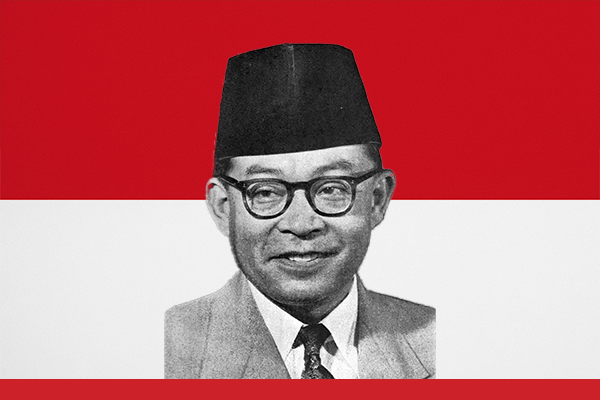
Early Life and Education
Mohammad Hatta was born on August 12, 1902, in Bukittinggi, West Sumatra, during the Dutch colonial era. His family valued education and discipline, which shaped his intellectual character from childhood. Hatta studied at Dutch schools, where he excelled academically despite facing racial and political discrimination. His passion for learning inspired him to continue his studies in the Netherlands, where he pursued economics at the Rotterdam School of Commerce.
Awakening of National Consciousness
While studying in the Netherlands, Hatta became deeply involved in the Indonesian nationalist movement. He joined the Indonesian Association (Perhimpunan Indonesia), which advocated for independence through diplomacy and intellectual debate. As a gifted orator and writer, Hatta promoted ideas of democracy, equality, and self-determination. He believed that education and economic independence would empower Indonesians to govern themselves.
Political Activism and Struggle Against Colonial Rule
The Dutch authorities viewed Hatta’s political activities as a threat. In 1927, they arrested and imprisoned him for his involvement in the nationalist movement. However, Hatta used his trial as a platform to defend Indonesia’s right to freedom. His articulate defense speech inspired many Indonesians and turned him into a symbol of resistance. After his release, he continued to organize movements and strengthen the call for independence.
Return to Indonesia and Partnership with Sukarno
Hatta returned to Indonesia in the 1930s and soon met Sukarno, another key nationalist leader. The two men shared a common goal: achieving independence for their homeland. Despite differences in personality—Sukarno was charismatic while Hatta was pragmatic—they complemented each other. During the Japanese occupation of Indonesia in World War II, they worked together to prepare for independence.
Proclamation of Indonesian Independence
On August 17, 1945, Hatta and Sukarno made history by proclaiming Indonesia’s independence. Hatta read the proclamation beside Sukarno in Jakarta, marking the birth of a new nation. Shortly afterward, Sukarno became president, and Hatta took office as the first Prime Minister and Vice President of Indonesia. Together, they laid the foundation for the Republic of Indonesia and built its early political institutions.
Leadership as Prime Minister
As Prime Minister, Mohammad Hatta played a central role in establishing Indonesia’s administrative and economic systems. He worked tirelessly to unify the diverse archipelago and ensure that the new nation could function independently. Hatta focused on diplomacy to gain international recognition for Indonesia’s sovereignty. His negotiations helped end the Dutch military aggression and secure the nation’s independence through the Linggadjati Agreement and later the Round Table Conference.
Economic Reforms and Cooperative Movement
Hatta believed that economic independence was just as important as political freedom. He introduced policies that supported cooperatives, small businesses, and rural development. He promoted the idea of a “people’s economy”, which emphasized equality and shared prosperity. His cooperative philosophy continues to influence Indonesia’s economic policies today.
Differences with Sukarno and Resignation
Despite their shared vision, Hatta and Sukarno eventually disagreed on the direction of the government. Sukarno leaned toward a more centralized and authoritarian style of leadership, while Hatta favored democracy and parliamentary governance. In 1956, Hatta resigned as Vice President and distanced himself from active politics. Nevertheless, he remained a respected moral voice in Indonesia’s political landscape.
Legacy and Contributions
Mohammad Hatta’s legacy endures as one of Indonesia’s greatest statesmen. He devoted his life to education, integrity, and service. He guided the nation through its formative years and left behind a framework for democratic governance and economic justice. Indonesians honor him as the “Father of the Cooperatives” and a national hero who shaped the country’s moral and political foundation.
Conclusion
Prime Minister Mohammad Hatta’s leadership combined intellect, courage, and vision. He helped Indonesia win independence and built the institutions that sustain its democracy. His ideals of cooperation, equality, and national unity continue to inspire generations. Through his dedication, Hatta secured his place as one of the true architects of modern Indonesia.