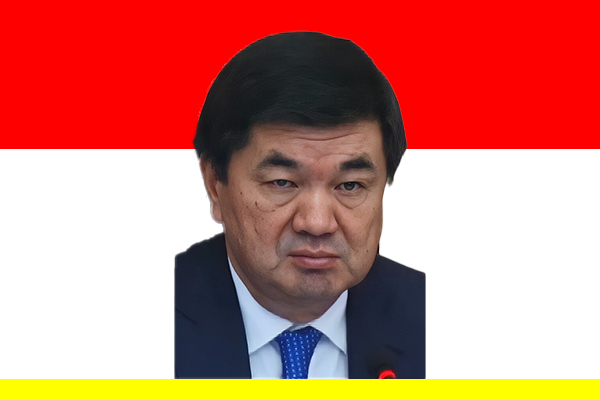
Mr. Muhammetkalyi Abylgaziev
In Office: 22 August 2017 – 26 August 2017
20 April 2018 – 15 June 2020
Political Party: Independent
Home State: Kochkor
Lifespan: born 1968
Country: Kyrgyzstan
Image credits available here.
Early Life and Education
Muhammetkalyi Abylgaziev was born in 1966 in the Issyk-Kul region of Kyrgyzstan. From an early age, he demonstrated a strong interest in economics and public service. He pursued higher education in finance and economics, which later became the foundation of his professional career. His academic background equipped him with technical expertise in budgeting, taxation, and economic planning, skills that proved valuable throughout his time in government.
Entry into Public Service
Abylgaziev began his career in public administration in the financial and tax sectors. He held various positions within Kyrgyzstan’s fiscal institutions, gaining firsthand experience in revenue collection and state budgeting. His reputation as a competent administrator grew steadily, leading to his appointment to senior roles within the Ministry of Finance and the State Tax Service. These positions allowed him to influence national financial policy and contribute to reforms aimed at improving tax efficiency and compliance.
Rise to Prime Minister
In April 2018, Muhammetkalyi Abylgaziev was appointed Prime Minister of Kyrgyzstan. His appointment came at a time when the country was focused on economic growth, anti-corruption measures, and improving public sector efficiency. As Prime Minister, he emphasized continuity in economic policy while also promoting reforms to strengthen state institutions. His leadership style was largely technocratic, prioritizing data-driven decision-making and administrative discipline.
Key Policies and Achievements
During his tenure, Abylgaziev focused on stabilizing the national economy and improving fiscal management. He supported reforms in taxation and customs administration to increase state revenue and reduce shadow economic activity. Infrastructure development, particularly in energy and transport, was another priority area under his leadership.
Abylgaziev also worked toward enhancing regional cooperation and attracting foreign investment. His government sought to create a more favorable business environment by simplifying regulations and improving governance standards. Social policy initiatives, including support for education and healthcare financing, were addressed within the constraints of the national budget.
Challenges and Controversies
Despite his technocratic approach, Abylgaziev’s term was not without challenges. His government faced criticism over allegations related to governance and transparency. Political pressure and public scrutiny increased as anti-corruption sentiments grew stronger in the country. In June 2020, amid mounting controversy and investigations, Abylgaziev resigned from his position as Prime Minister. His resignation reflected the broader political dynamics of Kyrgyzstan, where public accountability and political turnover are significant features of governance.
Political Legacy
Muhammetkalyi Abylgaziev’s legacy is closely tied to his role as an economic manager during a complex period for Kyrgyzstan. Supporters view him as a skilled administrator who sought to modernize fiscal systems and maintain economic stability. Critics, however, associate his tenure with unresolved governance issues and controversies.
Regardless of differing perspectives, Abylgaziev remains an important figure in Kyrgyzstan’s recent political history, representing the challenges faced by reform-oriented leaders in transitional political systems.
Conclusion
Muhammetkalyi Abylgaziev’s time as Prime Minister highlights the balance between technocratic governance and political accountability. His career reflects both the potential and the limitations of administrative reform in a dynamic political environment. As Kyrgyzstan continues to evolve, his tenure offers valuable lessons on leadership, economic policy, and the importance of public trust in government.