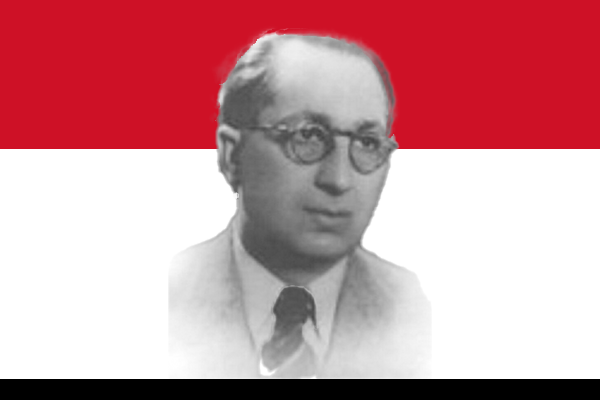
Early Life and Education
Muhsin al-Barazi was born in 1904 in the Hama region of Syria, into a prominent Kurdish family. He received a strong education and later studied law, which helped shape his analytical and diplomatic skills. His exposure to political ideas during the French Mandate period influenced his views on nationalism, governance, and Syria’s future as an independent state.
Entry into Politics
Al-Barazi entered Syrian politics during a time when the country was transitioning from foreign control to self-rule. He became involved in government administration and gained recognition for his intellectual abilities and eloquence. His political rise coincided with frequent military interventions in civilian governance, which defined Syria’s political climate during the late 1940s.
Role as Prime Minister of Syria
Muhsin al-Barazi served as Prime Minister of Syria in 1949 under the military regime of Husni al-Za’im. His appointment reflected the growing influence of the army in political affairs. As Prime Minister, al-Barazi focused on consolidating the new government, improving administrative efficiency, and redefining Syria’s foreign relations.
He supported policies aimed at stabilizing the economy and modernizing state institutions. Al-Barazi also played a key role in diplomatic negotiations, including controversial peace talks with Israel. These efforts were intended to secure Syria’s borders and international recognition, but they sparked widespread opposition within the country.
Political Views and Controversies
Al-Barazi believed in pragmatic diplomacy and strong central authority. However, his association with a military ruler and his willingness to negotiate with foreign powers made him a divisive figure. Many Syrians viewed his policies as compromising national interests, while others saw him as a realist attempting to protect Syria during a volatile period.
His critics accused him of undermining democratic principles by supporting an authoritarian regime. Despite his intellectual approach, al-Barazi underestimated the intensity of public resentment and opposition within both civilian and military circles.
Downfall and Execution
The government of Husni al-Za’im collapsed in August 1949 following a military coup led by Sami al-Hinnawi. Muhsin al-Barazi was arrested alongside other senior officials. After a swift and controversial trial, he was executed later that year.
His execution shocked the nation and highlighted the brutal nature of political power struggles in Syria at the time. The event symbolized the instability of Syrian politics and the dangers faced by civilian leaders operating under military regimes.
Legacy and Historical Significance
Muhsin al-Barazi’s legacy is complex. He is remembered as an intelligent and capable statesman whose political choices placed him at the center of one of Syria’s most turbulent eras. His life reflects the broader struggles of post-independence Syria, where ideals of nationalism, democracy, and stability often collided with military dominance and internal conflict.