Mr. Norodom Ranariddh
In Office: 24 September 1993 – 6 August 1997
Political Party: FUNCINPEC
Home State: Phnom Penh
Lifespan: 1944–2021
Country: Cambodia
Image credits available here.
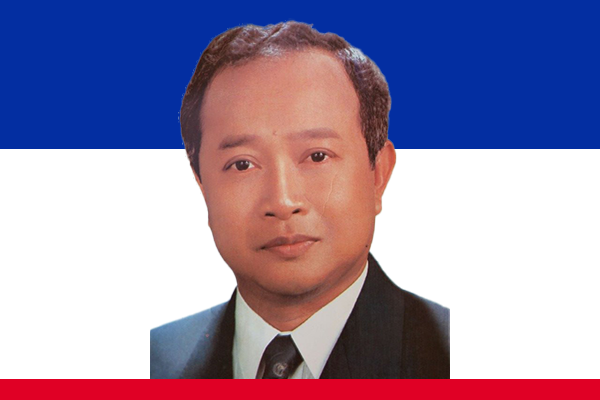
Early Life and Royal Background
Norodom Ranariddh was born on January 2, 1944, into the Cambodian royal family as the son of King Norodom Sihanouk. Growing up amid political change and regional instability, he experienced both privilege and upheaval. His royal lineage deeply influenced his political identity, providing him legitimacy in the eyes of many Cambodians. Ranariddh pursued higher education abroad, studying law in France, where he gained exposure to democratic institutions and constitutional principles that later shaped his political thinking.
Entry into Politics and the Formation of FUNCINPEC
After years in exile during Cambodia’s turbulent decades, Norodom Ranariddh emerged as a political leader in the late 1980s. He became the president of FUNCINPEC (National United Front for an Independent, Neutral, Peaceful, and Cooperative Cambodia), a royalist political party founded by his father. Under his leadership, FUNCINPEC positioned itself as a major force advocating peace, national reconciliation, and a return to constitutional monarchy. Ranariddh’s leadership helped transform the party into a credible alternative to long-standing revolutionary groups.
Rise to the Office of Prime Minister
Following the United Nations–sponsored general elections in 1993, Cambodia entered a new political era. FUNCINPEC won the largest share of votes, and Norodom Ranariddh emerged as the leading figure in forming the government. Due to political compromise and power-sharing arrangements, Cambodia adopted a unique system with two prime ministers. Ranariddh served as the First Prime Minister from 1993 to 1997, sharing authority with Hun Sen, who served as Second Prime Minister. This arrangement reflected both cooperation and deep rivalry within the new government.
Leadership Style and Governance Challenges
As Prime Minister, Norodom Ranariddh focused on rebuilding Cambodia after decades of war. He supported democratic reforms, the drafting and implementation of a new constitution, and the restoration of the monarchy with his father as king. However, governing proved extremely difficult. The coalition government faced constant tension, mistrust, and competing power structures. Ranariddh struggled to assert full authority over the military and state institutions, many of which remained loyal to rival factions. Despite these challenges, his tenure symbolized a break from one-party rule and a step toward pluralistic politics.
The 1997 Political Crisis
The fragile balance of power collapsed in 1997 when violent clashes erupted in Phnom Penh. Hun Sen’s forces gained control, and Norodom Ranariddh was removed from his position and forced into exile. This event marked a major turning point in Cambodia’s political development. Ranariddh’s removal effectively ended the dual prime minister system and highlighted the limits of coalition governance in a post-conflict society. The crisis also damaged his political standing, although he later returned to Cambodia and continued to participate in politics.
Later Political Career and Legacy
After returning from exile, Norodom Ranariddh remained active in Cambodian politics, leading various royalist parties and attempting to revive FUNCINPEC’s influence. Although he never regained the power he once held, he continued to represent royalist and opposition voices within the political system. His career reflected both the opportunities and constraints faced by leaders seeking democratic change in Cambodia.
Historical Significance
Norodom Ranariddh’s time as Prime Minister holds lasting historical importance. He symbolized hope for democratic transition after years of conflict and international isolation. While his leadership faced serious limitations, his role in the 1993 transition remains a defining chapter in modern Cambodian history. Ranariddh is remembered as a royal leader who attempted to blend tradition with democracy during one of the country’s most critical periods.