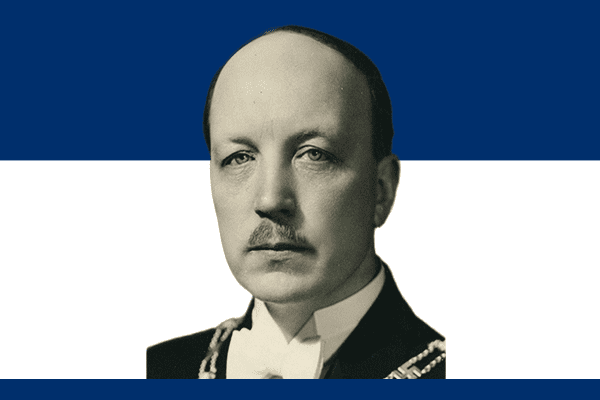
Early Life and Education
Risto Heikki Ryti was born on February 3, 1889, in Huittinen, Finland, which was then part of the Russian Empire. He grew up in a farming family and developed a strong work ethic from an early age. Ryti showed exceptional academic ability during his school years and pursued higher education in law.
He studied at the University of Helsinki and earned a law degree in 1912. After completing his studies, he began working as a lawyer and quickly gained recognition for his analytical thinking and professionalism. Alongside his legal career, Ryti developed a deep interest in economics and finance, which later shaped his political career.
Entry into Politics
Risto Ryti entered politics during a period of major political change in Finland. After Finland declared independence from Russia in 1917, the country faced economic difficulties and internal conflicts. Ryti joined the National Progressive Party and focused on strengthening Finland’s economy and democratic institutions.
He served as a Member of Parliament and earned respect for his calm and practical approach to political issues. In 1921, he became Finland’s Minister of Finance. During his time in office, he worked to stabilize the economy and improve financial management.
Later, Ryti became the governor of the Bank of Finland. In this role, he successfully guided the country through economic challenges during the Great Depression. His financial expertise made him one of Finland’s most trusted leaders.
Prime Minister and Wartime Leadership
In 1939, Finland faced the Soviet Union in the Winter War. During this critical period, Ryti became Prime Minister of Finland. He worked closely with military leaders and government officials to defend Finnish independence.
In 1940, Ryti became President of Finland after President Kyösti Kallio resigned due to health problems. As president, Ryti led Finland during World War II and made difficult decisions under intense pressure. He sought international support while ensuring Finland maintained its sovereignty.
During the Continuation War against the Soviet Union, Ryti cooperated with Germany because Finland needed military assistance. Although these alliances created controversy, Ryti prioritized Finland’s survival and security above all else.
The Ryti–Ribbentrop Agreement
One of the most important moments of Ryti’s presidency came in 1944. Germany demanded guarantees that Finland would not seek peace with the Soviet Union without German approval. To secure military aid for Finland, Ryti personally agreed to the Ryti–Ribbentrop Agreement.
This agreement helped Finland receive critical weapons and support during a dangerous phase of the war. Later, Ryti resigned from the presidency, allowing Finland’s new leadership to negotiate peace with the Soviet Union. His resignation demonstrated his willingness to sacrifice his political career for the nation’s future.
Trial and Later Life
After World War II, Soviet influence affected Finnish politics. Authorities accused several Finnish wartime leaders of responsibility for the conflict, and Ryti faced trial. In 1946, the court sentenced him to prison. Many Finns considered the trial politically motivated.
Ryti served several years in prison before receiving a pardon in 1949 due to poor health. After his release, he lived quietly and avoided public political activity. Despite the hardships he faced, many citizens continued to respect him for his wartime leadership.
Legacy
Risto Ryti remains an important figure in Finnish history. Historians recognize his intelligence, patriotism, and dedication to national independence. His economic policies strengthened Finland before the war, while his wartime leadership helped preserve the country’s sovereignty during a dangerous era.
Although debates continue about some of his wartime decisions, many people view Ryti as a leader who acted in Finland’s best interests during extraordinary circumstances. His contributions continue to influence discussions about leadership, diplomacy, and national survival.