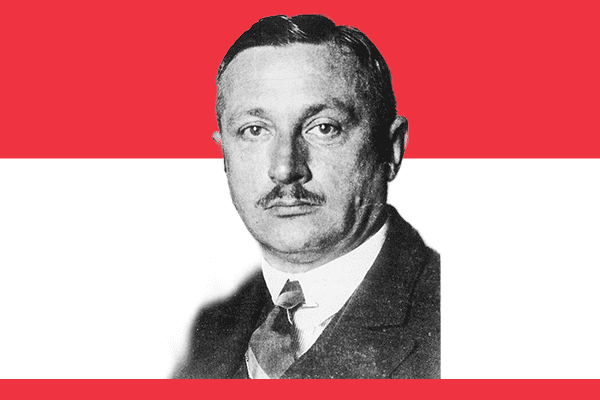
Early Life and Education
Rudolf Ramek was born on April 12, 1881, in Teschen, a town that was part of the Austro-Hungarian Empire. He came from a modest background and pursued higher education with determination. He studied law at the University of Vienna and developed strong analytical and leadership skills during his academic years.
After completing his studies, Ramek worked as a lawyer and legal expert. His experience in law gave him a deep understanding of government systems and public administration. He quickly gained respect for his intelligence and dedication to public service.
Political Career
Rudolf Ramek joined the Christian Social Party, one of Austria’s leading political groups during the early twentieth century. He actively participated in political discussions and focused on social welfare, economic reform, and national unity.
As Austria faced major political and economic challenges after World War I, Ramek emerged as a capable and reliable leader. He served in several important government positions before becoming Chancellor. His political approach emphasized cooperation, stability, and democratic governance.
Chancellor of Austria
In 1924, Rudolf Ramek became Chancellor of Austria. He assumed leadership during a difficult time when Austria struggled with financial problems, political disagreements, and the effects of the postwar crisis.
Ramek worked actively to improve Austria’s economy and strengthen public confidence in the government. He encouraged cooperation among political groups and supported measures that aimed to stabilize the country’s financial system. Instead of creating conflict, he promoted negotiation and compromise.
During his leadership, Austria continued rebuilding its institutions after the collapse of the Austro-Hungarian Empire. Ramek also supported administrative reforms and efficient governance. Although his term as Chancellor lasted only until 1926, he contributed significantly to the development of the Austrian Republic.
Leadership Style and Contributions
Rudolf Ramek demonstrated a calm and practical leadership style. He focused on solving problems through dialogue and legal processes. His legal background helped him make careful decisions and manage government affairs effectively.
He believed in democratic principles and worked to preserve political order during a period of uncertainty. Rather than seeking personal popularity, Ramek concentrated on national interests and responsible governance.
His contributions extended beyond his time as Chancellor. He continued participating in Austrian politics and public affairs, influencing discussions on law, administration, and social policy.
Later Life
After leaving the office of Chancellor, Rudolf Ramek remained active in political and legal circles. He continued serving Austria through advisory roles and public service. However, the political climate in Europe changed dramatically during the 1930s and 1940s.
Ramek witnessed the rise of authoritarian movements and the decline of democratic institutions across Europe. Despite these challenges, he remained connected to the ideals of constitutional government and public responsibility.
He spent his later years away from the center of political power but continued earning respect for his earlier contributions to Austrian democracy.
Legacy
Rudolf Ramek holds an important place in Austrian political history. Historians remember him as a dedicated leader who guided Austria during a fragile stage of its development. His efforts to strengthen democracy and stabilize the nation helped shape the future of the Austrian Republic.
Although he did not rule for a long period, his balanced leadership and commitment to public service left a lasting impression. He represented a generation of leaders who worked to rebuild Europe after World War I.
Conclusion
Rudolf Ramek played a significant role in Austria’s early republican history. Through active leadership, legal expertise, and dedication to democratic values, he helped Austria navigate a challenging period. His career demonstrated responsibility, integrity, and commitment to national progress. Today, people continue to remember him as an influential statesman who contributed to the stability and growth of modern Austria.