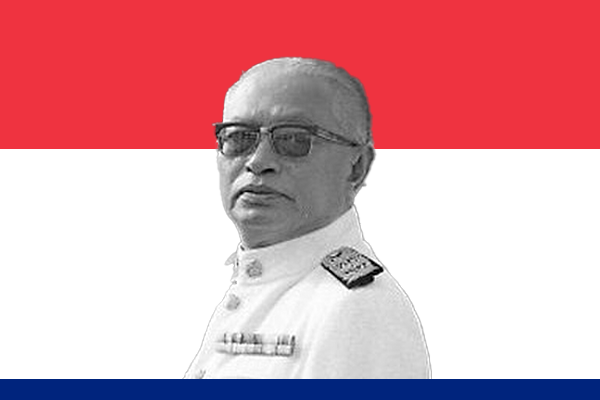
Early Life and Legal Career
Sanya Dharmasakti was born in 1907 in Thailand. He pursued higher education in law and quickly built a reputation as a disciplined and principled legal scholar. He dedicated much of his early career to judicial service, where he earned respect for his fairness and deep understanding of constitutional law. Before entering politics, he served as President of the Supreme Court of Thailand, a position that highlighted his independence and commitment to justice. His legal background later shaped his leadership style as prime minister.
Political Background and Rise to Office
In October 1973, Thailand experienced a major political upheaval. Mass student protests and public demonstrations forced the ruling military regime to step down. Amid this crisis, the nation required a neutral, trusted civilian figure to restore order and legitimacy. King Bhumibol Adulyadej appointed Sanya Dharmasakti as Prime Minister because of his credibility, non-partisan stance, and legal expertise. Sanya accepted the responsibility with a clear mission to stabilize the country and guide it toward democracy.
Leadership as Prime Minister
Sanya Dharmasakti served as Prime Minister from 1973 to 1975. During this period, he focused on rebuilding democratic institutions rather than consolidating personal power. He formed a civilian-led government and encouraged political participation across society. His administration promoted freedom of expression, which had remained restricted under military rule.
Sanya emphasized dialogue over force. He allowed student groups, intellectuals, and political activists to express their views openly. By doing so, he reduced political tension and strengthened public trust in civilian governance. His calm and principled approach helped Thailand avoid chaos during a sensitive transition.
Drafting a Democratic Constitution
One of Sanya Dharmasakti’s most important contributions was overseeing the drafting of a new democratic constitution. His government supported constitutional reforms that expanded civil liberties, strengthened parliamentary authority, and limited military influence in politics. In 1974, Thailand adopted a new constitution that reflected democratic ideals and the rule of law.
Sanya used his legal expertise to ensure that the constitution protected citizens’ rights and established checks and balances. This achievement marked a significant milestone in Thailand’s democratic development.
Challenges and Resignation
Despite his achievements, Sanya Dharmasakti faced serious challenges. Political fragmentation, economic pressures, and ideological divisions created instability. As political parties struggled to cooperate, governance became increasingly difficult. Recognizing these limitations, Sanya chose to step down in 1975 after democratic elections took place. His decision demonstrated his respect for democratic processes and his belief in peaceful political transition.
Legacy and Historical Significance
Sanya Dharmasakti left a lasting legacy as a transitional leader who placed national interest above personal ambition. He strengthened democratic foundations, restored civilian authority, and set a moral example in Thai politics. Historians remember him as a prime minister who ruled with humility, wisdom, and constitutional discipline.
His leadership proved that legal integrity and ethical governance could guide a nation through crisis. Even today, Sanya Dharmasakti remains a symbol of principled civilian leadership in Thailand’s political history.
Conclusion
Prime Minister Sanya Dharmasakti played a crucial role during one of Thailand’s most transformative periods. Through active leadership, constitutional reform, and democratic commitment, he helped steer the nation away from military dominance and toward civilian rule. His tenure continues to inspire discussions on ethical leadership and democratic responsibility in Thailand.