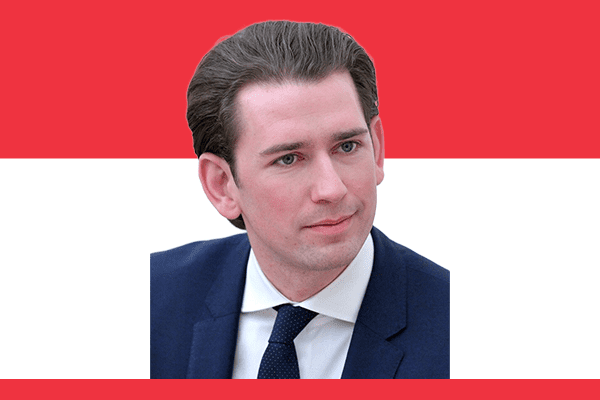
Mr. Sebastian Kurz
In Office: 7 January 2020 – 11 October 2021
18 December 2017 – 28 May 2019
Political Party: Austrian People’s Party
Home State: Sankt Pölten
Lifespan: born 1986
Country: Austria
Image credits available here.
Early Life and Education
Sebastian Kurz was born on August 27, 1986, in Vienna, Austria. He grew up in a middle-class family and spent most of his childhood in the Austrian capital. From a young age, he showed interest in politics and public affairs.
Kurz attended school in Vienna and later enrolled at the University of Vienna to study law. However, he chose to focus on his growing political career rather than complete his degree. His decision reflected his ambition and determination to succeed in politics at an early age.
Entry into Politics
Sebastian Kurz joined the youth wing of the Austrian People’s Party (ÖVP) during his teenage years. He quickly earned recognition for his leadership skills and ability to connect with young voters. In 2011, he became State Secretary for Integration, making him one of Austria’s youngest government officials.
In this role, Kurz promoted integration policies and encouraged immigrants to learn the German language and adapt to Austrian culture. He actively participated in public discussions and built a reputation as a confident and energetic politician.
Rise as Foreign Minister
In 2013, Sebastian Kurz became Austria’s Foreign Minister at the age of 27. This appointment made him one of the youngest foreign ministers in the world. During his tenure, he focused on European diplomacy, migration issues, and international cooperation.
Kurz gained international recognition during the European migrant crisis in 2015. He strongly supported tighter border controls and called for stricter immigration policies. His clear stance attracted both supporters and critics, but it significantly increased his popularity among conservative voters.
Chancellor of Austria
In 2017, Sebastian Kurz became leader of the Austrian People’s Party. He rebranded the party, modernized its image, and led it to victory in the national elections. At the age of 31, he became Chancellor of Austria, making him one of the youngest heads of government in the world.
As Chancellor, Kurz focused on economic reforms, tax reductions, digital modernization, and immigration control. He formed a coalition government with the Freedom Party of Austria (FPÖ). His leadership style emphasized efficiency, discipline, and strong communication.
However, political controversy affected his government in 2019 after the “Ibiza affair” involving coalition partners. The scandal led to the collapse of the coalition and forced new elections. Despite the crisis, Kurz returned to power in 2020 through a coalition with the Green Party.
Leadership During Challenges
During the COVID-19 pandemic, Sebastian Kurz introduced strict public health measures to control the spread of the virus. His government implemented lockdowns, vaccination campaigns, and economic support programs for businesses and workers.
Although many citizens supported these efforts, others criticized the restrictions and government decisions. Kurz remained a central figure in Austrian politics and continued to influence national debates on health, security, and the economy.
Resignation and Political Controversy
In 2021, corruption allegations and investigations created major challenges for Sebastian Kurz. Prosecutors examined claims related to public funds and media influence. Kurz denied wrongdoing but resigned as Chancellor to reduce pressure on the government.
His resignation marked a turning point in his political career. Even after leaving office, he remained an influential figure in Austrian and European political discussions.
Legacy and Influence
Sebastian Kurz transformed Austrian politics through modern campaigning, strategic communication, and a focus on conservative reforms. He attracted younger voters and reshaped the image of the Austrian People’s Party.
Supporters praise his leadership abilities and political vision, while critics question some of his policies and controversies. Regardless of differing opinions, Kurz remains one of the most important Austrian political figures of his generation.