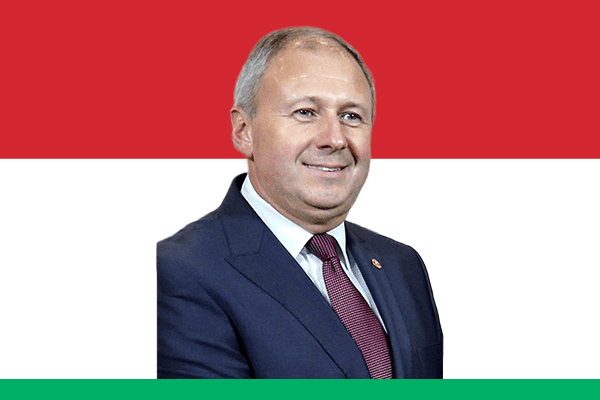
Early Life and Education
Sergei Nikolaevich Rumas was born on December 1, 1969, in Gomel, Belarus, which was then part of the Soviet Union. He developed a strong interest in economics and finance during his early years. To build his expertise, he pursued higher education in financial management and economics.
Rumas graduated from the Belarusian State Economic University, one of the leading institutions in the country. His academic background prepared him for a successful career in banking and public administration. Instead of choosing a purely academic path, he entered the financial sector and quickly established himself as a skilled economist.
Career in Banking and Finance
Sergei Rumas began his professional career in the banking industry. He worked in several financial institutions and gained valuable experience in economic planning and management. Through dedication and strategic thinking, he rose to important leadership positions.
He served as the chairman of Belgroprombank, one of Belarus’s major state-owned banks. During his leadership, he introduced reforms aimed at improving efficiency and strengthening the banking system. He supported modernization and encouraged better financial practices within the institution.
Rumas also worked in government economic agencies, where he contributed to national financial policies. His strong understanding of economics earned him respect among Belarusian officials and business leaders.
Political Career
Sergei Rumas entered high-level politics when the Belarusian government appointed him Deputy Prime Minister. In this role, he handled economic development, investment policies, and financial reforms. He focused on attracting foreign investment and improving Belarus’s economic environment.
In August 2018, President Alexander Lukashenko appointed Rumas as Prime Minister of Belarus. As prime minister, he concentrated on economic modernization and business reforms. He encouraged digital innovation, supported entrepreneurship, and promoted cooperation with international financial institutions.
Unlike many traditional political leaders, Rumas emphasized economic growth through practical reforms. He advocated for reducing unnecessary bureaucracy and improving conditions for private companies. His government worked on developing Belarus’s technology and information sectors, which contributed to the country’s growing reputation in the IT industry.
Leadership Style and Economic Vision
Sergei Rumas adopted a professional and reform-oriented leadership style. He believed that economic progress required innovation, transparency, and efficient governance. Instead of relying solely on state control, he encouraged limited market reforms and greater private sector participation.
He actively supported the growth of Belarus’s High-Tech Park, which became an important center for technology companies and startups. Under his leadership, Belarus strengthened its position in software development and digital services.
Rumas also promoted international economic cooperation. He participated in meetings with foreign investors and international organizations to improve Belarus’s economic partnerships. His approach reflected a modern understanding of global economic trends.
Challenges During His Tenure
Despite his reform efforts, Sergei Rumas faced significant challenges during his time as prime minister. Belarus’s economy struggled with slow growth, dependence on Russia, and international political pressures. Implementing reforms proved difficult within the country’s centralized political system.
In 2020, Belarus experienced political unrest following the presidential election. During this period, political tensions overshadowed economic issues. Shortly afterward, Rumas left the position of prime minister, and Roman Golovchenko replaced him.
After leaving office, reports suggested that Rumas spent time outside Belarus. However, his contributions to economic policy and banking reforms remain important aspects of his public career.
Legacy and Importance
Sergei Rumas remains known as one of Belarus’s more reform-minded political figures. He brought financial expertise and modern economic ideas into government leadership. His support for entrepreneurship, technology, and banking reform influenced Belarus’s economic development.
Although political limitations restricted many of his initiatives, he demonstrated the importance of professional economic management. His leadership highlighted the role of innovation and modernization in national growth.
Conclusion
Sergei Rumas built a career based on economics, banking, and public service. As Prime Minister of Belarus, he actively promoted modernization and economic reform. Through his practical leadership and financial expertise, he contributed to the development of Belarus’s banking and technology sectors. His career continues to represent an important chapter in modern Belarusian economic history.