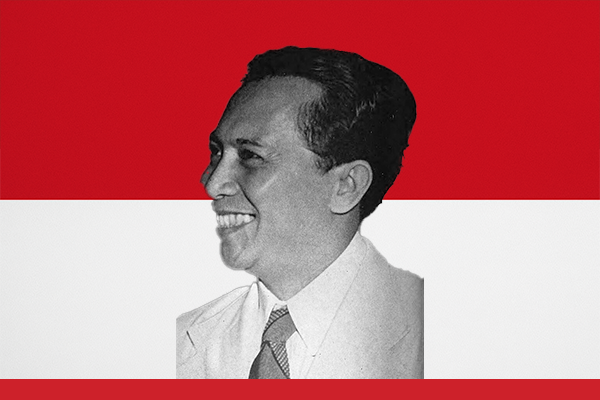
Mr. Sutan Sjahrir
In Office: 14 November 1945 – 3 July 1947
Political Party: Socialist Party
Home State: Padang Panjang
Lifespan: 1909–1966
Country: Indonesia
Image credits available here.
Early Life and Education
Sutan Sjahrir was born on March 5, 1909, in Padang Panjang, West Sumatra. His father worked as a public prosecutor, and his family valued education deeply. Sjahrir studied at the prestigious Bandung Technical College before continuing his education in the Netherlands. During his studies in Europe, he became active in political discussions and joined the Indonesian Nationalist Association. His exposure to European political thought strengthened his belief in freedom, democracy, and social justice.
Political Awakening in the Netherlands
While living in the Netherlands, Sjahrir engaged with fellow Indonesian students who shared his dream of independence. He actively participated in the Perhimpunan Indonesia (Indonesian Association), where he voiced his opposition to Dutch colonialism. His writings and speeches showed his strong commitment to human rights and equality. Sjahrir believed that education and intellectual development were essential for national liberation.
Return to Indonesia and Nationalist Activities
Sjahrir returned to Indonesia in the 1930s and immediately joined the independence movement. He worked closely with leaders like Soekarno and Hatta, contributing to the nationalist struggle. The Dutch colonial authorities viewed him as a threat and imprisoned him several times for his political activities. Despite his imprisonment, he continued to influence the independence movement through his writings and ideas.
Role During the Japanese Occupation
During the Japanese occupation of Indonesia (1942–1945), Sjahrir refused to collaborate with the Japanese administration. He organized underground resistance movements and educated young Indonesians about democracy and freedom. His decision to resist collaboration reflected his moral integrity and deep patriotism. When Indonesia declared independence in August 1945, Sjahrir emerged as one of the few leaders trusted by both nationalists and international powers.
Becoming Indonesia’s First Prime Minister
In November 1945, President Soekarno appointed Sutan Sjahrir as Indonesia’s first prime minister. At just 36 years old, he became the face of Indonesia’s diplomatic struggle for international recognition. Sjahrir represented Indonesia at negotiations with the Dutch, seeking to secure peace and sovereignty through diplomacy rather than violence. His calm demeanor, fluency in several European languages, and logical reasoning impressed foreign leaders.
Leadership and Political Vision
As prime minister, Sjahrir emphasized democracy, political tolerance, and international cooperation. He believed that Indonesia needed strong institutions and educated citizens to sustain independence. He drafted policies that promoted open discussion and opposed authoritarianism. His political party, the Socialist Party of Indonesia, aimed to build a fair and equal society. Sjahrir’s leadership style combined intellect with compassion, earning him respect both at home and abroad.
Challenges and Resignation
Sjahrir faced enormous challenges during his tenure. The political climate was volatile, and many revolutionary groups opposed his moderate approach toward the Dutch. Some nationalists accused him of being too willing to compromise. Despite these criticisms, he continued to advocate for peaceful negotiation. In 1947, due to political pressure and disagreements within the government, he resigned as prime minister. Nevertheless, his contributions to Indonesia’s early diplomacy remained crucial.
Later Life and Imprisonment
After his resignation, Sjahrir remained active in politics and continued to write about democracy and socialism. However, his relationship with President Soekarno grew tense. In 1962, the government arrested him for alleged involvement in opposition activities. He was never formally tried, and his health declined during imprisonment. In 1965, the government allowed him to travel abroad for medical treatment, but he passed away in Zurich, Switzerland, on April 9, 1966.
Legacy and Contributions
Sutan Sjahrir left behind a legacy of moral leadership, intellectual independence, and democratic ideals. Indonesians remember him as a leader who valued integrity over power and intellect over force. His writings continue to inspire scholars and politicians who believe in democratic governance. As Indonesia’s first prime minister, Sjahrir paved the way for modern diplomacy and civic leadership in the nation’s formative years.