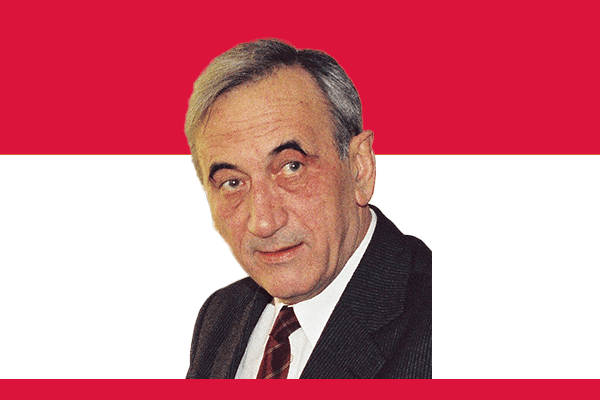
Early Life and Career
Tadeusz Mazowiecki was born on April 18, 1927, in Płock. He studied law at the University of Warsaw and later built a career as a journalist and political thinker. During the post-war period, he became active in Catholic intellectual circles and worked for several publications that promoted social reform and dialogue between the government and society.
Mazowiecki gradually emerged as a leading intellectual voice who criticized authoritarian rule while advocating peaceful change. In the 1970s and 1980s, he supported democratic opposition movements and defended civil liberties. His ideas helped shape the political vision of the opposition movement in Poland.
Role in the Solidarity Movement
Mazowiecki played a key role in the Solidarity movement, the independent labor union that challenged communist authority in Poland. He served as an advisor to Lech Wałęsa and other leaders of the movement. When workers organized strikes in 1980, Mazowiecki helped negotiate between the government and union representatives.
The communist authorities later imposed martial law in 1981, but opposition leaders continued their struggle for political freedom. Mazowiecki remained committed to peaceful negotiation and democratic reform. His moderate approach helped create dialogue between the opposition and the government.
Becoming Prime Minister
In 1989, representatives of the government and the opposition held negotiations known as the Polish Round Table Talks. These talks resulted in partially free elections and political reforms. The opposition won significant support from voters, which opened the door for democratic leadership.
In August 1989, the Polish parliament appointed Tadeusz Mazowiecki as prime minister. He became the first non-communist head of government in Eastern Europe since the late 1940s. His appointment symbolized the collapse of communist control in Poland and inspired democratic movements in other countries.
Policies and Reforms
Mazowiecki’s government introduced sweeping reforms to transform Poland’s economy and political system. His administration supported the economic program designed by Leszek Balcerowicz. The plan aimed to stabilize the economy, control inflation, and introduce market-based policies.
These reforms, often called the “shock therapy,” rapidly shifted Poland from a centrally planned economy to a market economy. Although the changes created short-term economic hardship, they laid the groundwork for long-term economic growth.
Mazowiecki also focused on strengthening democratic institutions, protecting civil liberties, and integrating Poland into the international community. His government restored freedom of the press and encouraged political pluralism.
Later Life and Legacy
Mazowiecki left office in 1991 after Poland held its first fully democratic parliamentary elections. Even after leaving the premiership, he continued to contribute to international diplomacy and human rights work. The United Nations appointed him as a special envoy for human rights in the former Yugoslavia during the Balkan conflicts of the 1990s.
Tadeusz Mazowiecki died on October 28, 2013, in Warsaw. Historians remember him as a statesman who guided Poland through one of the most important political transitions in its history. His leadership demonstrated that peaceful negotiation and democratic values could transform an entire political system.
Conclusion
Tadeusz Mazowiecki stands as a key figure in Poland’s democratic transformation. His work with the Solidarity movement, his leadership during the transition from communism, and his commitment to human rights shaped the future of Poland. By promoting democratic reforms and economic modernization, he helped guide the country toward stability and prosperity. His legacy continues to influence Poland’s political life and remains an important example of peaceful political change in Europe.