Mr. Tunku Abdul Rahman
In Office: 31 August 1957 – 22 September 1970
Political Party: Alliance
Home State: Alor Setar
Lifespan: 1903–1990
Country: Malaysia
Image credits available here.
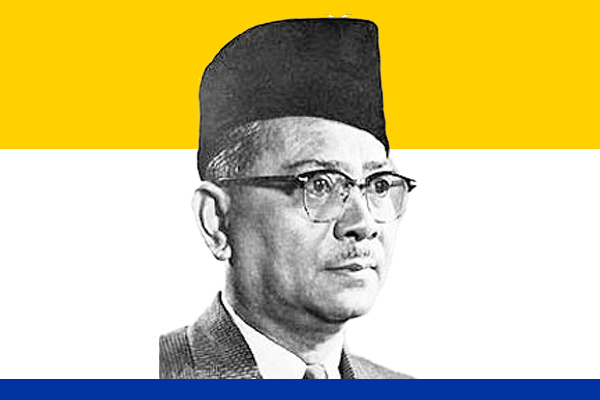
Early Life and Education
Tunku Abdul Rahman was born on 8 February 1903 in Alor Setar, Kedah, into the royal family of Kedah. From an early age, he received both traditional Malay education and Western schooling. He later studied law in England, where exposure to democratic values and constitutional governance influenced his political thinking. These experiences prepared him for leadership at a time when Malaya needed a calm yet determined voice.
Entry into Politics
After returning to Malaya, Tunku Abdul Rahman initially served in the civil service before entering politics. He joined the United Malays National Organisation (UMNO), where he quickly emerged as a national leader. In 1951, he became president of UMNO and worked to transform it into a mass political movement. His leadership emphasized cooperation rather than confrontation, which helped him gain widespread support.
Leadership in the Independence Movement
Tunku Abdul Rahman led negotiations with the British government for Malaya’s independence. He firmly believed that freedom could be achieved through peaceful dialogue rather than violence. His approach succeeded, and on 31 August 1957, Malaya gained independence. Tunku became the country’s first Prime Minister, symbolizing a new era of self-rule and national pride.
Prime Minister of Independent Malaya and Malaysia
As Prime Minister, Tunku Abdul Rahman focused on building strong institutions and maintaining political stability. He encouraged democratic governance, respected the rule of law, and protected civil liberties. One of his most significant achievements was the formation of Malaysia in 1963, which united Malaya with Sabah, Sarawak, and Singapore. Although Singapore later separated, the formation of Malaysia marked a bold step in regional cooperation.
Promoting Unity and Multiculturalism
Tunku Abdul Rahman governed a country made up of different ethnic, religious, and cultural communities. He strongly promoted harmony and mutual respect among Malays, Chinese, Indians, and indigenous groups. His inclusive policies helped prevent deep divisions and encouraged national integration. He believed that unity was essential for progress and long-term peace.
Foreign Policy and International Role
On the international stage, Tunku Abdul Rahman positioned Malaysia as a peaceful and cooperative nation. He supported regional cooperation and played an important role in the early development of Southeast Asian unity. His foreign policy emphasized neutrality, friendship, and respect for sovereignty, which enhanced Malaysia’s global reputation.
Challenges and Later Years
Despite his achievements, Tunku Abdul Rahman faced challenges, including economic inequality and ethnic tensions. After years of service, he stepped down as Prime Minister in 1970. In his later years, he remained active in social and religious causes and continued to inspire future generations with his dedication to national unity.
Legacy
Tunku Abdul Rahman’s legacy endures as the founding Prime Minister of Malaysia. His peaceful leadership, commitment to democracy, and belief in unity laid the foundation for the nation’s development. Malaysians continue to remember him as a leader who placed national harmony above personal power and guided the country through its most important formative years.