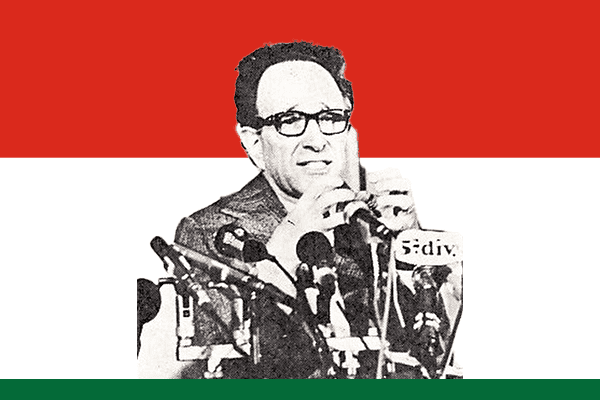
Early Life and Military Career
Vasco Gonçalves was born on May 3, 1921, in Lisbon, Portugal. He pursued a military career and trained as an engineer in the Portuguese Army. Through dedication and discipline, he rose steadily through the ranks. Instead of remaining detached from political developments, he became increasingly aware of the limitations imposed by the authoritarian regime of António de Oliveira Salazar and later Marcelo Caetano.
He joined a group of reform-minded officers who sought change. These officers eventually formed the Armed Forces Movement (MFA), which aimed to end the dictatorship and establish democratic governance.
Role in the Carnation Revolution
In April 1974, Vasco Gonçalves actively participated in the Carnation Revolution, a peaceful military coup that overthrew the Estado Novo regime. The revolution marked a turning point in Portuguese history, ending decades of authoritarian rule.
Rather than adopting a passive stance after the revolution, Gonçalves took on leadership responsibilities within the new political framework. He became a key figure in the transitional government and worked closely with other military leaders to stabilize the country.
Prime Ministership
Vasco Gonçalves served as Prime Minister of Portugal multiple times between 1974 and 1975 during a highly volatile period known as the Processo Revolucionário em Curso (PREC). He actively promoted socialist-oriented policies and sought to restructure Portuguese society.
He implemented land reforms, nationalized key industries, and expanded workers’ rights. Instead of maintaining existing economic structures, he pursued transformative policies that aimed to reduce inequality and empower the working class. His government encouraged political participation and sought to dismantle remnants of the old regime.
Political Vision and Policies
Gonçalves believed in strong state involvement in the economy and supported socialist principles. He actively aligned with left-wing factions within the military and political landscape. His leadership style emphasized rapid change and structural reform.
However, his policies sparked intense debate and opposition. Many political groups, including moderates and conservatives, criticized his approach as too radical. Despite these challenges, he continued to advocate for his vision of a more equal and socially just Portugal.
Challenges and Decline
Portugal faced significant instability during Gonçalves’ tenure. Political divisions deepened, and economic difficulties increased. Instead of unifying all factions, his policies sometimes intensified conflicts between different political groups.
In 1975, opposition to his leadership grew stronger, leading to his eventual removal from power. More moderate forces gained influence, steering Portugal toward a more balanced democratic system. Although he stepped down, his impact on the revolutionary period remained significant.
Legacy and Significance
Vasco Gonçalves left a lasting mark on Portuguese history. He played a central role in dismantling authoritarian rule and initiating democratic reforms. His actions helped shape the direction of post-revolution Portugal, even as later governments modified or reversed some of his policies.
Rather than fading into obscurity, he remained an important figure associated with the revolutionary ideals of the 1970s. Historians continue to debate his legacy, recognizing both his contributions and the controversies surrounding his leadership.
Conclusion
Vasco Gonçalves stands as a key figure in Portugal’s transition to democracy. Through active leadership and bold reforms, he influenced one of the most critical periods in the nation’s history. His tenure reflects both the possibilities and challenges of revolutionary change.