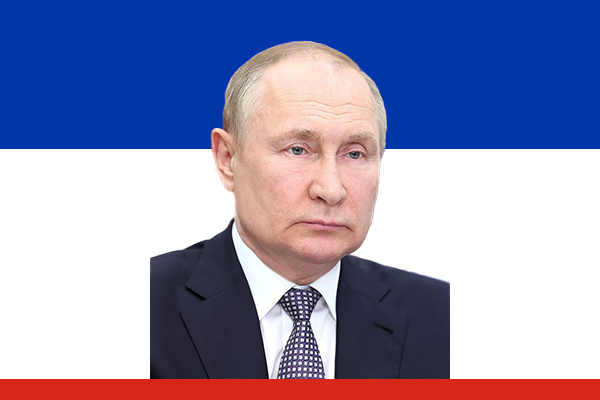
Mr. Vladimir Putin
In Office: 8 May 2008 – 7 May 2012
9 August 1999 – 7 May 2000
Political Party: Independent
Home State: Saint Petersburg
Lifespan: 1952–)
Country: Russia
Image credits available here.
Early Life and Career
Putin grew up in a modest family and developed an early interest in law and public service. After graduating from Leningrad State University in 1975 with a degree in law, he joined the KGB, where he actively served as an intelligence officer for 16 years. His experience in the KGB honed his analytical skills and discipline, preparing him for a future in politics.
When he left the KGB in 1991, Putin began working with the administration of Saint Petersburg’s mayor, Anatoly Sobchak. He actively managed international relations for the city and quickly gained a reputation for efficiency and loyalty. His strong performance caught the attention of national leaders, propelling him to higher positions in Moscow.
Rise to National Power
In 1999, President Boris Yeltsin appointed Putin as Prime Minister of Russia. Putin immediately took decisive steps to stabilize the nation’s economy and strengthen state authority. He actively fought corruption, reorganized government structures, and enforced laws with consistency. When Yeltsin resigned later that year, Putin became Acting President, and Russian citizens elected him as President in 2000.
After serving two presidential terms, Putin stepped down in 2008 in accordance with constitutional limits and supported Dmitry Medvedev as President. Medvedev appointed Putin as Prime Minister, allowing him to continue guiding the nation’s policies.
Leadership as Prime Minister
As Prime Minister from 2008 to 2012, Putin actively directed Russia’s economic and social policies. He implemented strategies to diversify the economy, reduce poverty, and increase foreign investment. Putin launched infrastructure projects, modernized industries, and supported domestic innovation to reduce Russia’s dependence on energy exports.
During the global financial crisis of 2008–2009, Putin took bold actions to stabilize the Russian economy. He coordinated stimulus packages, provided financial aid to major companies, and supported regional governments. His leadership ensured economic recovery and maintained public confidence during a period of international instability.
Putin also prioritized defense modernization. He strengthened Russia’s military capacity, promoted new technologies, and enhanced the nation’s defense readiness. His focus on national security reinforced Russia’s status as a global power.
Foreign Policy and Global Influence
As Prime Minister, Putin actively advanced Russia’s foreign policy goals. He improved relations with neighboring countries, increased cooperation with emerging economies, and asserted Russia’s influence in global affairs. He played a key role in energy diplomacy, using Russia’s vast oil and gas resources to build strategic partnerships.
Putin’s leadership emphasized Russia’s sovereignty and resistance to external pressure. He consistently defended national interests in global negotiations and sought to restore Russia’s international prestige. His pragmatic yet assertive approach earned him recognition as one of the most powerful leaders in the world.
Legacy and Continuing Influence
Vladimir Putin’s tenure as Prime Minister solidified his reputation as a strong and strategic leader. His policies improved economic stability, strengthened national unity, and enhanced Russia’s global standing. Even after returning to the presidency in 2012, the initiatives he launched as Prime Minister continued to shape Russia’s development.
Putin’s political journey reflects resilience, discipline, and a deep commitment to his vision of Russia as a sovereign and powerful state. Through decisive leadership, he actively transformed post-Soviet Russia into a modern nation with a renewed sense of identity and direction.