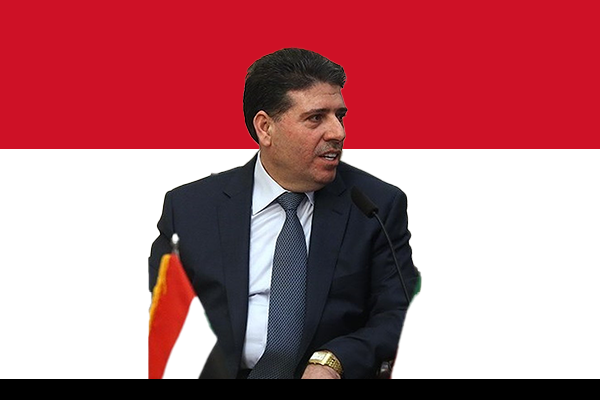
Early Life and Education
Wael Nader al-Halqi was born in 1964 in the Daraa Governorate of southern Syria. He pursued higher education in medicine and trained as a gynecologist. Before entering politics, he worked as a physician, earning recognition for his professional background rather than a purely political career path. His medical training influenced his later involvement in public health administration and government services.
Entry into Politics
Al-Halqi entered Syrian public life through health administration and local governance. He became involved with the Arab Socialist Ba’ath Party, Syria’s ruling political party, which provided the platform for his advancement in government. His reputation as a technocrat and administrator helped him rise within the state system. Prior to becoming prime minister, he served as Minister of Health, where he focused on healthcare organization and public medical services.
Appointment as Prime Minister
In August 2012, Wael Nader al-Halqi was appointed Prime Minister of Syria. His appointment came after the resignation of his predecessor during the escalation of the Syrian conflict. The government selected al-Halqi as a figure seen as capable of managing civil administration while the country faced internal unrest and international pressure. His role was to ensure continuity of governance, oversee ministries, and implement executive decisions during wartime conditions.
Leadership During Crisis
Al-Halqi’s tenure coincided with severe national challenges. Infrastructure damage, population displacement, economic sanctions, and shortages of essential goods defined this period. As prime minister, he emphasized maintaining public services such as healthcare, education, food distribution, and fuel supply. He frequently addressed economic stability, subsidy systems, and salary adjustments for public-sector employees. His government aimed to limit the social impact of the conflict while preserving administrative control.
Policies and Governance
During his time in office, al-Halqi focused on internal management rather than foreign policy, which remained largely under presidential authority. He supported measures to stabilize the Syrian pound, control inflation, and regulate markets. His administration also prioritized rebuilding efforts in areas under government control. Although progress was limited by conflict conditions, he consistently promoted national resilience and state sovereignty in official statements.
Public Image and Security Incident
In 2013, Wael Nader al-Halqi survived an assassination attempt when a bomb targeted his convoy in Damascus. He sustained injuries but recovered, and the incident highlighted the security risks faced by Syrian officials at the time. The event increased his visibility and reinforced his image as a government figure operating under constant threat during the conflict.
End of Term and Legacy
Al-Halqi served as Prime Minister until 2016, when a new government was formed. After leaving office, he continued to be associated with state institutions but remained largely outside the public spotlight. His legacy is closely tied to crisis governance rather than reform-driven leadership. Supporters view him as a stabilizing administrator during war, while critics associate his tenure with the hardships of the conflict era.
Conclusion
Wael Nader al-Halqi’s period as Prime Minister represents a chapter defined by survival, administration, and continuity rather than political transformation. His background as a medical professional and technocrat shaped his pragmatic approach to leadership. Serving during one of Syria’s most turbulent times, he remains a significant figure in understanding the functioning of the Syrian government amid prolonged national crisis.