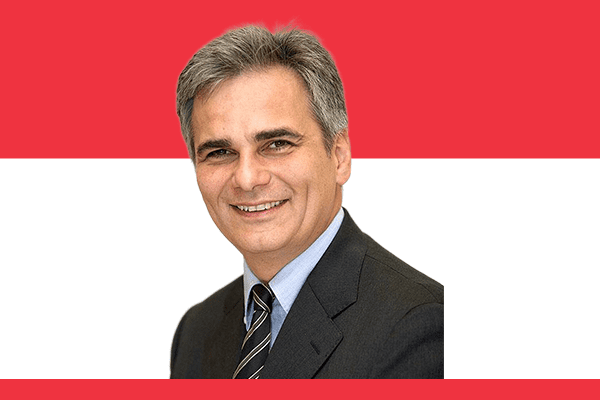
Mr. Werner Faymann
In Office: 2 December 2008 – 9 May 2016
Political Party: Austrian People’s Party
Home State: Sankt Pölten
Lifespan: born 1960
Country: Austria
Image credits available here.
Early Life and Education
Werner Faymann was born on May 4, 1960, in Vienna, Austria. He grew up in the Austrian capital and developed an interest in politics at a young age. During his student years, he became actively involved in youth political organizations connected to the Social Democratic Party.
Although he enrolled at the University of Vienna, Faymann decided to focus fully on politics instead of completing his degree. His strong communication skills and dedication helped him rise quickly within Austria’s political system.
Beginning of Political Career
Faymann started his political journey through local and regional organizations in Vienna. He gained recognition for his organizational abilities and his focus on social issues. In the 1980s and 1990s, he worked in several political positions that strengthened his experience in administration and leadership.
He later became a member of the Vienna city government, where he concentrated on housing and urban development policies. His work improved public housing programs and increased support for affordable living initiatives. These achievements helped him gain popularity among working-class citizens.
Rise to National Leadership
In 2007, Werner Faymann became Austria’s Federal Minister for Transport, Innovation, and Technology. During his tenure, he promoted infrastructure development and modernization projects across the country. His practical approach and ability to cooperate with different political groups increased his national reputation.
In 2008, the Social Democratic Party selected Faymann as its leader. Later that year, he became Chancellor of Austria after national elections. At a time of global financial uncertainty, Faymann focused on protecting Austria’s economy and maintaining employment opportunities.
Leadership as Chancellor
As Chancellor, Faymann worked to strengthen Austria’s social welfare system and economic stability. He supported policies that protected workers, pensioners, and families during the global financial crisis. Instead of implementing severe austerity measures, he encouraged balanced economic strategies that supported growth and social security.
Faymann also played an active role in European Union discussions. He supported cooperation among European nations and emphasized the importance of unity during economic challenges. Austria maintained relatively stable economic conditions during much of his leadership.
His government invested in infrastructure, education, and transportation projects to support long-term development. Faymann believed that public investment could strengthen the economy and improve living standards.
Refugee Crisis and Political Challenges
One of the most difficult periods of Faymann’s leadership came during the European refugee crisis in 2015. Austria received a large number of refugees and migrants traveling into Europe. Initially, Faymann supported humanitarian assistance and international cooperation.
However, the growing political pressure surrounding immigration created divisions within Austrian politics. Critics argued that the government struggled to manage the crisis effectively. Public debates over border control and migration policies intensified during this period.
Faymann later supported stricter border measures to address public concerns. Despite these efforts, political tensions continued to grow, and his popularity declined.
Resignation and Later Life
In May 2016, Werner Faymann resigned as Chancellor and leader of the Social Democratic Party after losing significant political support. His resignation marked the end of nearly eight years as Austria’s head of government.
After leaving office, Faymann reduced his direct involvement in frontline politics. Nevertheless, his years in leadership left a lasting impact on Austrian social and economic policy.
Legacy
Werner Faymann’s political career reflects his commitment to social democracy, economic stability, and public welfare. He guided Austria during a difficult financial period and promoted policies that supported workers and families. Although political controversies affected the later years of his leadership, he remained dedicated to public service and European cooperation.
His tenure as Chancellor demonstrated the challenges modern European leaders face in balancing economic management, humanitarian concerns, and public opinion. Faymann continues to hold an important place in Austria’s contemporary political history.