Mr. Yahyo Azimov
In Office: 7 February 1996 – 20 December 1999
Political Party: Independent
Home State: Khujand
Lifespan: born 1947
Country: Tajikistan
Image credits available here.
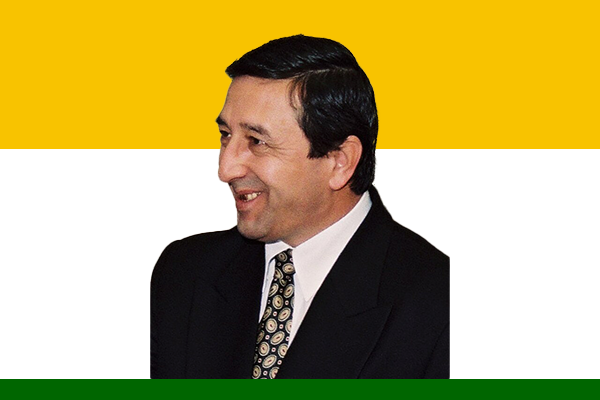
Early Life and Political Background
Yahyo Azimov emerged as an important political figure during a decisive phase in the history of Tajikistan. He belonged to a generation of administrators shaped by the Soviet political system and trained within its institutional structures. Like many leaders of the late Soviet period, Azimov developed his career through party and government roles that emphasized administrative discipline, economic management, and political stability. His background prepared him to operate during a time of rapid change, uncertainty, and reform across the Soviet Union.
Azimov’s rise occurred when political authority in Central Asia was undergoing transformation due to policies of restructuring and openness. These reforms altered the balance between Moscow and the union republics, creating space for local leaders to assume greater responsibility. Within this environment, Azimov gained recognition as a capable administrator who could manage complex governmental tasks under pressure.
Appointment as Prime Minister
Yahyo Azimov served as Prime Minister of the Tajik Soviet Socialist Republic from 1990 to 1991. His appointment came at a moment when the Soviet Union faced deep economic decline, political fragmentation, and growing nationalist movements. Tajikistan, like other republics, struggled with shortages, declining industrial output, and rising social tensions. As Prime Minister, Azimov stood at the center of efforts to maintain administrative order while responding to unprecedented political demands.
His leadership coincided with the weakening of central Soviet authority and increasing calls for sovereignty within Tajikistan. This period required careful coordination between republican institutions and union-level authorities, a task made difficult by rapid policy shifts and public uncertainty.
Role and Responsibilities
As Prime Minister, Azimov oversaw the Council of Ministers, which managed economic planning, industry, agriculture, and social services. He worked within a system transitioning away from strict central planning while lacking a fully developed alternative. This placed his government in a challenging position, responsible for sustaining essential services amid economic disruption.
Azimov focused on maintaining stability in key sectors such as food supply, employment, and public administration. He also addressed issues related to labor unrest and regional disparities, which had begun to surface more openly during the late Soviet era. His role demanded negotiation skills, administrative experience, and political caution.
Leadership During a Transitional Era
Yahyo Azimov’s tenure as Prime Minister reflected the broader crisis of governance facing the Soviet republics. He did not govern in a period of long-term policy continuity but rather during a transition marked by uncertainty and experimentation. The collapse of traditional economic networks and the erosion of party authority limited the effectiveness of government decisions.
Despite these constraints, Azimov represented continuity in administration at a time when abrupt change could have led to deeper instability. His leadership illustrated the efforts of Soviet-era officials to adapt to reform while preserving order.
End of Tenure and Historical Context
Azimov’s term ended in 1991, the same year the Soviet Union dissolved. This event fundamentally reshaped Tajikistan’s political landscape, leading to independence and, soon after, internal conflict. The structures within which Azimov had operated disappeared, replaced by new institutions struggling to define authority and legitimacy.
Although his time in office was brief, it coincided with one of the most significant turning points in Tajik history. His government functioned during the final chapter of Soviet rule, making his tenure historically important as a bridge between two eras.
Legacy and Significance
Yahyo Azimov is remembered as a transitional leader whose service reflected the challenges of late Soviet governance. He did not preside over sweeping reforms or long-term policy achievements, but his role was significant in maintaining administrative continuity during systemic collapse. Historians often view leaders like Azimov as representatives of an era defined by constrained choices rather than expansive authority.
His career highlights the difficulties faced by republic-level leaders in balancing reform, stability, and public expectations. In this sense, Yahyo Azimov remains an important figure for understanding Tajikistan’s passage from Soviet rule toward independence.