Early Life and Education
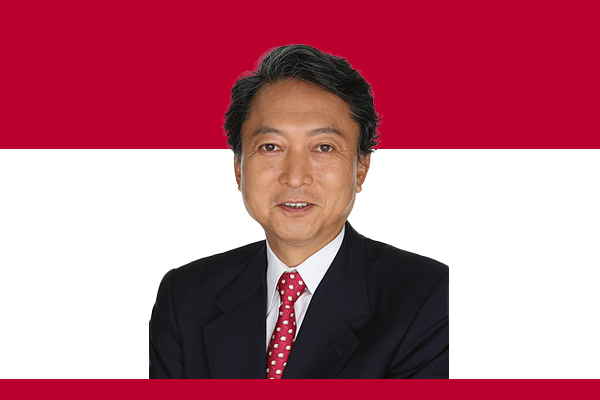
Yukio Hatoyama was born on February 11, 1947, in Tokyo, Japan, into a prominent political family. His grandfather, Ichirō Hatoyama, served as Japan’s Prime Minister in the 1950s, while his father, Iichirō Hatoyama, held the position of Foreign Minister. Yukio Hatoyama graduated from the University of Tokyo with a degree in engineering in 1969. He later earned a Ph.D. in industrial engineering from Stanford University in the United States, gaining international exposure that shaped his global perspective.
Entry into Politics
Hatoyama entered politics in 1986 when he won a seat in the House of Representatives as a member of the Liberal Democratic Party (LDP). However, he grew dissatisfied with the party’s dominance and internal corruption. In 1993, he left the LDP and co-founded the New Party Sakigake. Later, he played a key role in forming the Democratic Party of Japan (DPJ), which aimed to challenge the LDP’s long-standing political control.
Rise to Leadership
Hatoyama steadily gained influence within the DPJ, eventually becoming its leader in May 2009. He positioned himself as a reformer committed to transparency, economic revitalization, and reducing bureaucratic influence in government affairs. By presenting a vision of “people-centric politics,” he inspired voters seeking change after decades of LDP rule.
Becoming Prime Minister
In August 2009, under Hatoyama’s leadership, the DPJ achieved a historic victory in the general elections, ending more than fifty years of nearly uninterrupted LDP dominance. On September 16, 2009, Hatoyama became Japan’s 93rd Prime Minister. His election symbolized a new era of reform and raised hopes for political and economic transformation.
Key Policies and Reforms
As Prime Minister, Hatoyama introduced policies aimed at improving social welfare, education, and the environment. He launched initiatives to provide financial support for families with children, reduce greenhouse gas emissions, and shift Japan toward renewable energy sources. He also promised to review Japan’s ties with the United States, particularly the agreement concerning American military bases in Okinawa, seeking to create a more balanced relationship.
Hatoyama emphasized reducing government bureaucracy and increasing political accountability. He encouraged decision-making led by elected officials rather than career bureaucrats, marking a departure from Japan’s traditional administrative practices.
Challenges and Resignation
Despite his ambitious agenda, Hatoyama faced significant challenges. Disagreements over the relocation of the U.S. Marine base in Okinawa created tensions with both the United States and local residents. Economic stagnation and internal party divisions further weakened his administration.
By June 2010, mounting political pressure and declining public support led Hatoyama to resign as Prime Minister, less than nine months after taking office. His resignation reflected the difficulties of implementing reforms in Japan’s complex political environment.
Later Life and Legacy
After stepping down, Hatoyama retired from active politics in 2012 but continued to speak on issues such as East Asian regional cooperation and renewable energy. His tenure, though brief, represented a turning point in Japanese politics by challenging the LDP’s monopoly on power and advocating for transparency and reform.
Conclusion
Yukio Hatoyama’s time as Prime Minister highlighted the possibilities and limitations of political change in Japan. While his ambitious reforms faced obstacles, his leadership marked the beginning of a more competitive political landscape, shaping debates on governance and policy for years to come.