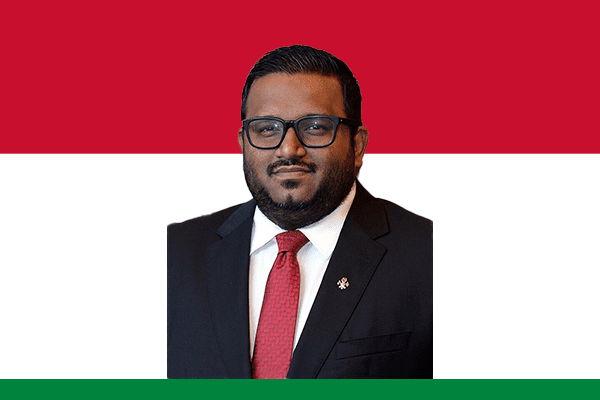
Early Life and Education
Ahmed Adeeb Abdul Ghafoor was born on January 31, 1981, in Malé, the capital of the Maldives. He grew up in a society that strongly relied on tourism and maritime trade. During his early years, Adeeb showed interest in communication and public affairs. He pursued higher education in the field of journalism and media studies, which helped him develop strong communication skills.
His education and exposure to media allowed him to understand public opinion and political messaging. These skills later helped him enter politics and gain recognition within political circles. Adeeb also worked in journalism and media-related roles before formally joining the government.
Entry into Politics
Ahmed Adeeb entered national politics during a period of political transformation in the Maldives. The country had begun shifting toward a more democratic political system, and new political leaders emerged during this time. Adeeb joined the Progressive Party of Maldives (PPM), which became a major political force in the country.
His political career advanced quickly. Government leaders recognized his organizational skills and communication abilities. As a result, he received important responsibilities within the party and the government. His influence continued to grow as he worked closely with senior political leaders.
Role as Tourism Minister
Before becoming Vice President, Ahmed Adeeb served as the Minister of Tourism. Tourism plays a vital role in the Maldivian economy, and the ministry holds significant importance in national policy. During his tenure, Adeeb worked to promote the Maldives as a global tourist destination.
He supported initiatives aimed at expanding tourism infrastructure, attracting foreign investment, and increasing the number of international visitors. The government promoted luxury resorts, marine tourism, and sustainable tourism practices. Adeeb often represented the Maldives at international tourism events and worked to strengthen the country’s global tourism reputation.
Vice Presidency
In July 2015, Ahmed Adeeb assumed the office of Vice President of the Maldives. At the time of his appointment, he was one of the youngest individuals to hold the position. His appointment reflected the government’s intention to include younger leaders in top political roles.
As Vice President, Adeeb assisted the president in government administration and national policy matters. He participated in official meetings, supported economic programs, and helped coordinate government initiatives. His leadership style emphasized energetic decision-making and rapid policy implementation.
Controversy and Legal Issues
Ahmed Adeeb’s political career faced a major turning point in September 2015. Authorities accused him of involvement in an alleged assassination attempt against the president after an explosion occurred on a presidential speedboat. Following an investigation, officials arrested Adeeb and removed him from the vice presidency.
The case attracted significant international attention and sparked debate within the Maldives about political justice, governance, and transparency. Courts later convicted Adeeb on several charges related to terrorism and corruption. His supporters argued that political motives influenced the legal actions, while critics emphasized the importance of accountability in government.
Legacy and Political Significance
Ahmed Adeeb’s rise and fall in Maldivian politics illustrate the complexities of leadership in a rapidly changing political environment. His career demonstrated how quickly political influence can grow for young leaders. At the same time, his legal controversies highlighted the challenges of maintaining transparency and trust in governance.
Political analysts often view Adeeb’s story as a reflection of the broader political tensions in the Maldives during the 2010s. His experience also sparked discussions about institutional reform, judicial independence, and the role of emerging leaders in national politics.
Although his time as Vice President was brief, Ahmed Adeeb remains a notable figure in the political history of the Maldives. His career continues to influence discussions about governance, accountability, and political development in the country.