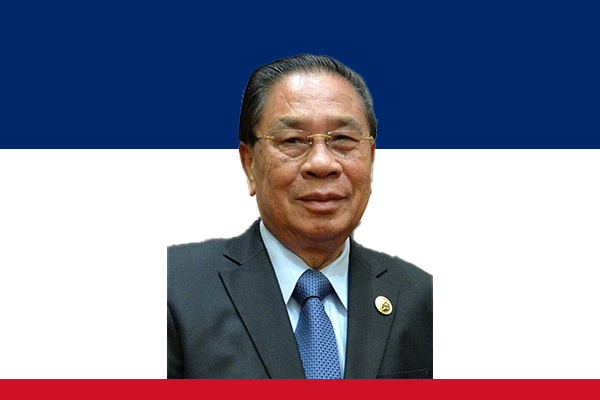
Early Life and Political Background
Choummaly Sayasone was born in 1936 in Laos and became involved in revolutionary activities at a young age. Like many leaders of his generation, he was associated with the Pathet Lao movement, which played a decisive role in the establishment of the Lao People’s Democratic Republic in 1975. His early political life was marked by discipline, loyalty to party ideology, and a strong emphasis on national unity.
Before assuming the vice presidency, Choummaly held several important positions within the state and the ruling party. These roles helped him gain experience in administration, defense, and party organization, laying the groundwork for higher office.
Tenure as Vice President
Choummaly Sayasone served as Vice President of Laos from 1998 to 2006. During this period, the country was navigating regional economic changes, internal development challenges, and the need to strengthen state institutions. As Vice President, he worked closely with the President and the Council of Ministers to support policy coordination and political stability.
His role was not merely ceremonial. He participated actively in party leadership, state decision-making, and representation of Laos at official events. The vice presidency under Choummaly emphasized continuity with established socialist principles while cautiously adapting to new economic realities.
Role in Governance and Party Leadership
A defining feature of Choummaly Sayasone’s vice-presidential years was his strong position within the Lao People’s Revolutionary Party. He was regarded as a reliable party figure who upheld ideological unity and internal discipline. His influence extended beyond government into party structures, where strategic decisions about leadership succession and policy direction were shaped.
Choummaly was also known for supporting the gradual strengthening of state institutions rather than rapid political change. This approach aligned with Laos’ broader governance philosophy, which prioritized stability, centralized authority, and incremental reform.
Defense, Security, and National Stability
Before becoming Vice President, Choummaly Sayasone had experience in defense and security affairs, including service as Minister of National Defense. This background influenced his approach as Vice President, where issues of sovereignty, internal security, and national cohesion remained important.
During his tenure, Laos continued to focus on maintaining internal peace, strengthening the role of the armed forces within the state framework, and ensuring that political authority remained firmly under party leadership.
Transition to the Presidency
Choummaly Sayasone’s performance as Vice President positioned him as a natural successor within the leadership hierarchy. In 2006, he was elected President of Laos, reflecting the trust placed in him by the party and state institutions. His vice-presidential years are often seen as a preparatory phase that demonstrated his administrative capability and political reliability.
Legacy as Vice President
The legacy of Vice President Choummaly Sayasone lies in his contribution to leadership continuity in Laos. His tenure supported a smooth political transition, reinforced party authority, and upheld a governance model focused on stability and long-term control rather than abrupt reform. As Vice President, he played a crucial role in shaping the leadership path that later defined his presidency and influenced modern Lao politics.