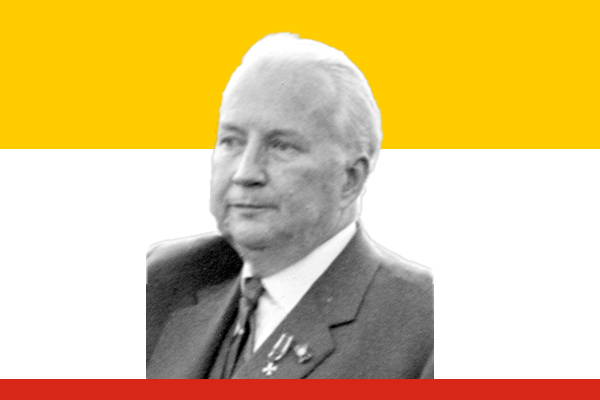
Early Life and Education
Born on August 4, 1903, in Emanuelssegen (now part of Katowice, Poland), Hans-Christoph Seebohm hailed from a family deeply rooted in the mining industry. He pursued studies in mining engineering at the Technical University of Berlin, earning his doctorate in 1932. His early career saw him managing mining operations in Silesia and overseeing the “Aryanization” of Czechoslovakian mines during the Nazi era.
Political Ascendancy
Post-World War II, Seebohm entered the political arena, aligning with the German Party (DP) and later the Christian Democratic Union (CDU). He represented the Hamburg-Harburg constituency in the Bundestag from 1949 until his death in 1967. His political tenure was marked by a steadfast commitment to the expellee community, particularly Sudeten Germans, a stance that often placed him at odds with mainstream political sentiments.
Minister of Transport
Seebohm’s most enduring legacy lies in his 17-year tenure as Federal Minister of Transport, serving under Chancellors Konrad Adenauer and Ludwig Erhard. During this period, he championed the expansion of Germany’s autobahn network, transforming the nation’s infrastructure and setting a global benchmark for highway systems. His initiatives also included the introduction of standardized road signs and the establishment of rest areas, enhancing road safety and convenience.
Vice Chancellorship and Sudeten German Advocacy
In 1966, Seebohm briefly held the position of Vice Chancellor, reflecting his influence in German politics. Concurrently, he led the Sudeten German Landsmannschaft, advocating for the rights and recognition of Sudeten Germans. His speeches, such as the 1964 address in Nuremberg, where he called for the return of Sudetenland territories, stirred controversy and highlighted the complexities of post-war German identity and territorial disputes.
Legacy
Hans-Christoph Seebohm’s contributions to German transport infrastructure are indelible. His work laid the foundation for the modern autobahn system, a testament to his vision and dedication. However, his political affiliations and advocacy for expellee rights remain subjects of historical scrutiny, reflecting the nuanced and often contentious nature of post-war German politics.