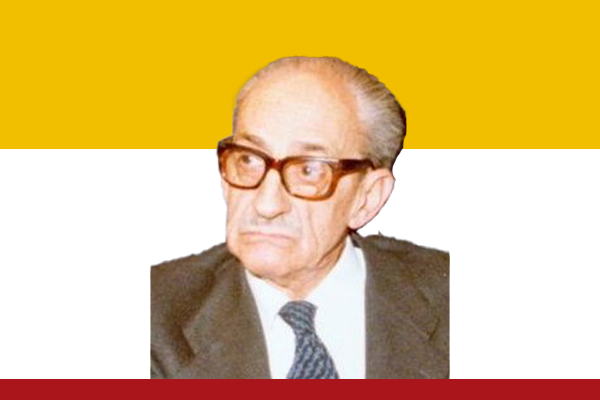
Early Life and Military Career
Manuel Gutiérrez Mellado was born in Madrid in 1912. From a young age, he chose to dedicate his life to serving Spain through military duty. He joined the Spanish Army and received his training at the General Military Academy of Zaragoza, where he developed a strong sense of discipline and integrity. During the Spanish Civil War, he fought for the Nationalist side, showing remarkable commitment to duty and leadership on the battlefield.
After the war, he rose steadily through the military ranks due to his strategic mind and deep understanding of military organization. As Spain underwent decades of dictatorship under Francisco Franco, Gutiérrez Mellado continued to serve but also observed the changing needs of the Spanish nation. He believed that Spain’s armed forces should evolve into a modern, professional institution that respected democratic values.
Transition to Democracy
When Franco died in 1975, Spain began a challenging journey toward democracy. Gutiérrez Mellado stood at the center of this transformation. King Juan Carlos I and Prime Minister Adolfo Suárez recognized his integrity and appointed him Deputy Prime Minister for Defense Affairs in 1976. In this role, he became one of the key architects of the democratic transition.
He worked tirelessly to reform the military, reducing the influence of Francoist loyalists and introducing a new vision of armed forces committed to constitutional principles. He emphasized that soldiers must protect the people and the democratic system rather than any single political ideology. His firm yet respectful leadership earned him the respect of both civilians and soldiers.
Defender of Constitutional Order
Gutiérrez Mellado’s most defining moment came on February 23, 1981, during the attempted coup d’état known as 23-F. When armed Civil Guards stormed the Spanish Parliament, many froze in fear. However, Gutiérrez Mellado, despite his advanced age, stood up against the rebels. He confronted the armed officers and ordered them to put down their weapons, defending Spain’s fragile democracy with unmatched bravery.
His courage became a symbol of loyalty to the democratic constitution. This act demonstrated that true military honor lies in protecting democratic institutions, not overthrowing them. The Spanish people deeply admired his fearless stand, and his image from that day became a lasting symbol of integrity and courage.
Reforms and Legacy
As Deputy Prime Minister, Gutiérrez Mellado modernized Spain’s defense system. He helped create the Ministry of Defense and integrated the three branches of the armed forces under one command structure. He also advocated for the depoliticization of the military and promoted the idea of national defense as a civic duty shared by all citizens.
After retiring from politics, he continued to serve Spain through various foundations and educational initiatives. He focused on promoting civic responsibility, ethical leadership, and respect for democratic values.
His life reflected his belief that Spain could only progress through unity, justice, and respect for the rule of law. Even after his retirement, he remained an influential voice on national security and civil-military relations.
Conclusion
Manuel Gutiérrez Mellado transformed Spain’s armed forces from instruments of dictatorship into defenders of democracy. His leadership during the transition period and his courage during the 1981 coup attempt cemented his place among Spain’s greatest patriots. Through his example, he taught future generations that true strength lies not in domination but in service to freedom and constitutional order.