Mr. Mariano Rajoy
In Office: 27 April 2000 – 4 September 2003
Political Party: People’s Party
Home State: Santiago de Compostela
Lifespan: born 1955
Country: Spain
Image credits available here.
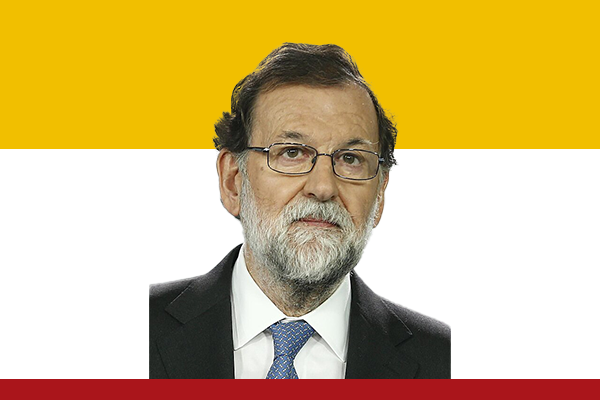
Early Life and Entry into Politics
Mariano Rajoy Brey was born on March 27, 1955, in Santiago de Compostela, Spain. He grew up in a family with a deep respect for public service, which shaped his interest in politics. After studying law at the University of Santiago de Compostela, Rajoy joined the civil service as a property registrar. His ambition and dedication soon led him toward a career in politics.
In the late 1970s, Rajoy entered politics through the regional government of Galicia. He joined the centrist People’s Alliance, which later evolved into the People’s Party (PP). His early political experiences allowed him to understand both local and national governance, helping him develop a pragmatic approach to political leadership.
Rise in the People’s Party
Rajoy steadily gained influence within the People’s Party due to his discipline and reliability. He served in various regional and national positions, including as a member of the Spanish Parliament and a minister under Prime Minister José María Aznar. His calm and analytical nature made him a trusted figure among his peers.
During the 1990s, Rajoy held key ministerial roles, such as Minister of Public Administration and Minister of Education and Culture. In each position, he worked to modernize Spain’s public institutions and promote efficient governance. His results-oriented approach distinguished him from many of his contemporaries.
Role as Deputy Prime Minister
In 2000, José María Aznar appointed Mariano Rajoy as Deputy Prime Minister. In this role, Rajoy oversaw major areas of national administration, including political coordination, economic policy, and domestic affairs. He acted as a bridge between the government and the party, ensuring that the policies of the People’s Party aligned with the interests of Spanish citizens.
As Deputy Prime Minister, Rajoy emphasized economic stability and administrative transparency. He pushed for fiscal responsibility, encouraged investment, and supported reforms that aimed to strengthen Spain’s economic foundation. He worked closely with other ministers to enhance Spain’s infrastructure and education systems. Rajoy also handled crises with a steady hand, earning a reputation as a leader who valued order and consistency.
Leadership Style and Political Philosophy
Rajoy led through patience, reason, and respect for institutional continuity. He valued dialogue and compromise, believing that effective leadership required calm decision-making rather than emotional reaction. His conservative outlook balanced modernization with tradition, reflecting his belief in gradual progress over radical change.
Throughout his tenure, Rajoy displayed resilience in the face of political challenges. He preferred practical solutions to ideological confrontations and encouraged consensus among different sectors of society. His leadership style made him one of the most stable figures in Spanish politics during a period of change.
Transition to Prime Minister
Rajoy’s performance as Deputy Prime Minister positioned him as a natural successor within the People’s Party. After José María Aznar stepped down, Rajoy became the party’s leader in 2004. Though he initially lost the general election, he continued to guide the opposition with persistence. His determination eventually paid off when he became Prime Minister in 2011, marking the next chapter of his political career.
As Prime Minister, Rajoy applied the same principles that defined his time as Deputy Prime Minister—discipline, stability, and a focus on economic recovery. His leadership in the early 2000s laid the groundwork for his later achievements.
Legacy of Deputy Leadership
Mariano Rajoy’s years as Deputy Prime Minister remain a crucial part of his political legacy. He strengthened Spain’s administrative institutions, supported economic reform, and maintained governmental stability. His ability to stay composed under pressure and his focus on responsibility earned him lasting respect within his party and across Spain.
Rajoy’s tenure as Deputy Prime Minister demonstrated his readiness for greater challenges and set the stage for his future as a national leader. His service reflected dedication to Spain’s progress and his belief that steady, thoughtful leadership could guide the nation through change and uncertainty.