Mr. Najib Razak
In Office: 7 January 2004 – 3 April 2009
Political Party: Barisan Nasional
Home State: Kuala Lipis
Lifespan: born -1953
Country: Malaysia
Image credits available here.
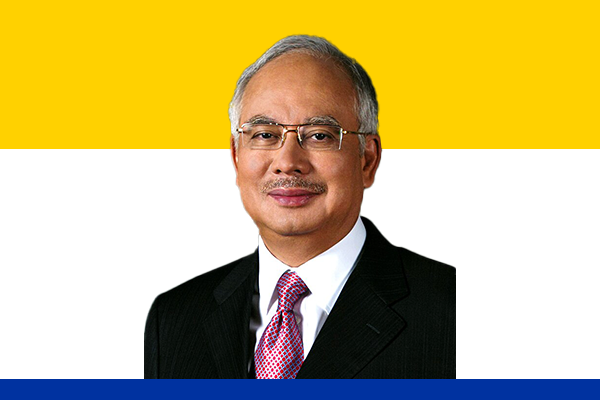
Early Political Background
Najib Razak was born into a respected political family. His father, Abdul Razak Hussein, served as Malaysia’s second Prime Minister. This background exposed Najib to governance and public service at an early age. He entered politics at a young age and quickly rose through the ranks of the United Malays National Organisation (UMNO). His early career focused on rural development, education, and national unity, which later became key themes during his leadership.
Appointment as Deputy Prime Minister
Najib Razak became Deputy Prime Minister of Malaysia in 2004, serving under Prime Minister Abdullah Ahmad Badawi. Alongside this role, he also held the powerful portfolio of Minister of Defence. As Deputy Prime Minister, Najib acted as the second-highest authority in the federal government and played a central role in policy coordination, cabinet management, and political strategy.
Role and Responsibilities
As Deputy Prime Minister, Najib Razak supported the Prime Minister in governing the country and represented Malaysia at important national and international forums. He focused strongly on strengthening national security, modernizing the armed forces, and improving administrative efficiency. His leadership style emphasized discipline, stability, and long-term planning. Najib also played a key role in managing relations within the ruling coalition and addressing internal party challenges.
Contributions to National Development
During his tenure, Najib Razak supported economic reforms aimed at increasing competitiveness and attracting foreign investment. He promoted infrastructure development and encouraged technological modernization. His involvement in defence reforms helped enhance Malaysia’s military readiness and strategic capabilities. As Deputy Prime Minister, he also worked to balance economic growth with social stability, particularly in a multi-ethnic society like Malaysia.
Path to the Prime Ministership
Najib Razak’s performance as Deputy Prime Minister strengthened his public image as a capable administrator and national leader. His experience in managing key ministries and handling complex political issues positioned him as a natural successor. In 2009, he succeeded Abdullah Ahmad Badawi and became the Prime Minister of Malaysia, marking the culmination of his political journey that began long before his deputy leadership role.
Legacy as Deputy Prime Minister
Najib Razak’s tenure as Deputy Prime Minister remains significant in Malaysian political history. It was a period that shaped his leadership approach and laid the foundation for his later policies as Prime Minister. His time in office reflected ambition, administrative skill, and a strong influence on Malaysia’s political direction during the early 21st century.