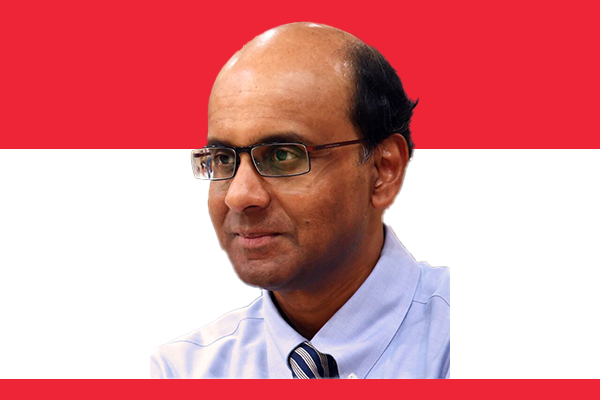
Early Life and Education
Tharman Shanmugaratnam was born on 25 February 1957 in Singapore. He comes from a family that valued education and public service, which strongly influenced his future path. He pursued higher education at some of the world’s most prestigious institutions. Tharman earned a Bachelor’s degree in Economics from the London School of Economics, followed by a Master’s degree at the University of Cambridge. He later completed his Master of Public Administration at Harvard University.
His academic background in economics and public policy laid a strong foundation for his later work in government and international organizations.
Entry into Politics
Before entering politics, Tharman served in the Administrative Service of Singapore, where he worked on economic and social policy. He entered active politics in 2001 after being elected as a Member of Parliament. His expertise and clear thinking quickly set him apart, and he was soon entrusted with major responsibilities in government.
Role as Deputy Prime Minister
Tharman was appointed Deputy Prime Minister in 2011, serving alongside his role as Minister for Finance and later as Minister for Education. As Deputy Prime Minister, he focused on steering Singapore through global economic uncertainty while ensuring that growth remained inclusive and sustainable.
One of his major contributions was emphasizing inclusive growth, ensuring that economic progress benefited all segments of society, not just the elite. He supported policies aimed at improving wages, skills training, and social mobility, particularly for lower- and middle-income Singaporeans.
Economic Leadership and Reforms
As a trained economist, Tharman played a key role in strengthening Singapore’s economic resilience. He supported long-term investments in education, innovation, and workforce skills. He also emphasized the importance of adapting to globalization while protecting social cohesion.
Tharman was instrumental in shaping Singapore’s responses to global financial challenges, including the aftermath of the global financial crisis. His approach balanced fiscal discipline with social support, helping maintain stability and public confidence.
International Recognition
Beyond Singapore, Tharman gained global recognition for his leadership in international economic forums. He chaired major global bodies focused on financial stability, development, and inclusive growth. His thoughtful views on inequality, globalization, and multilateral cooperation made him a respected voice on the world stage.
He was often praised for bridging perspectives between developed and developing economies and for advocating reforms in global financial institutions.
Leadership Style and Legacy
Tharman Shanmugaratnam is known for his integrity, humility, and ability to communicate complex ideas in simple terms. His leadership style emphasizes consensus, fairness, and long-term thinking. As Deputy Prime Minister, he helped shape a more inclusive vision of progress for Singapore.
His legacy as Deputy Prime Minister lies in strengthening economic foundations while keeping social equity at the center of policy-making. Tharman remains an influential figure in Singapore’s public life and a symbol of principled, thoughtful leadership.