SINGAPORE
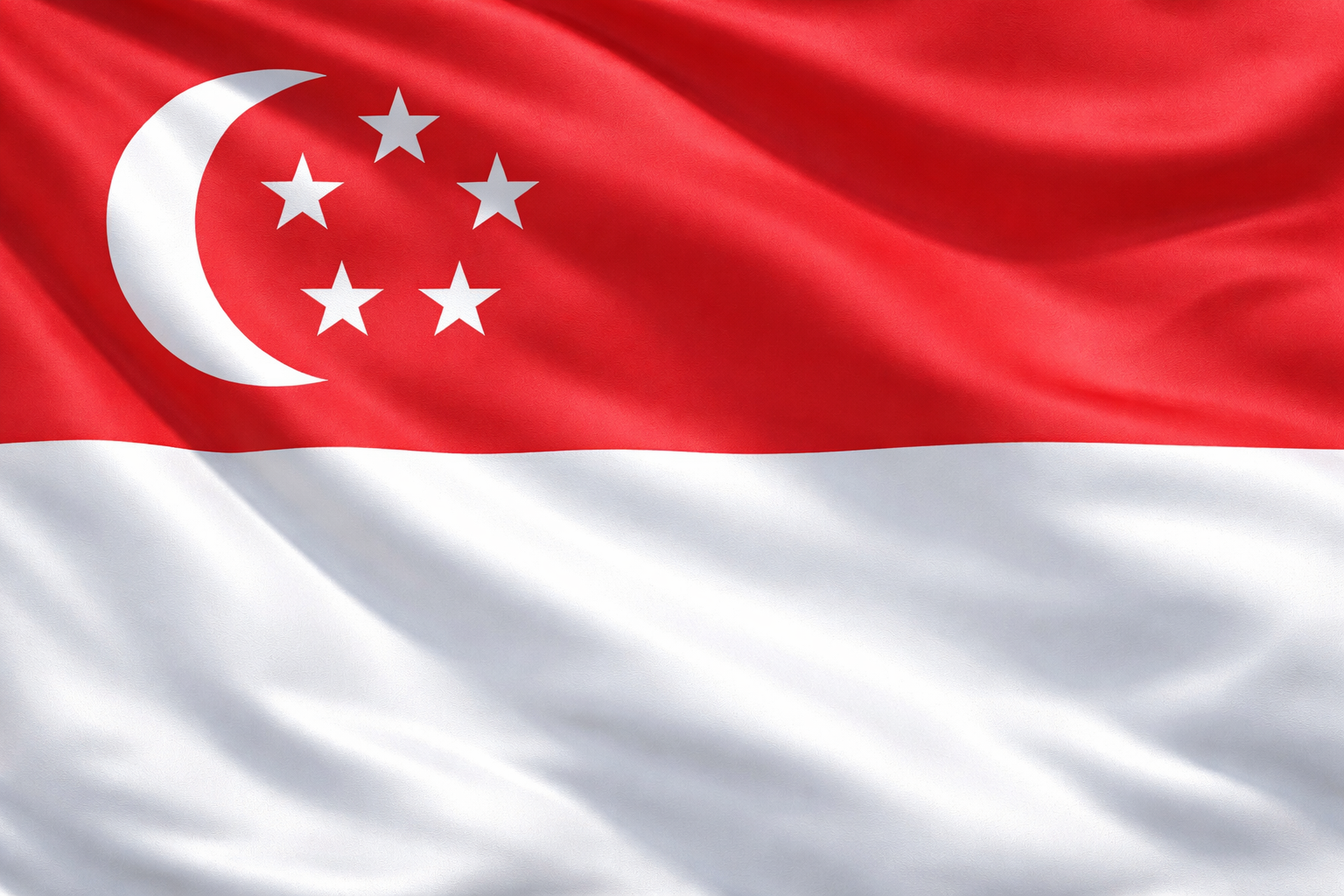
Singapore Flag
The Singapore flag consists of two horizontal halves: red on the top and white on the bottom. The red color represents universal brotherhood and equality of man, while white symbolizes purity and virtue. In the upper left corner, there is a white crescent moon and five white stars arranged in a circle. The crescent represents a young nation on the rise, and the five stars stand for democracy, peace, progress, justice, and equality.
Introduction
Singapore is a small but highly developed island country located in Southeast Asia. It lies at the southern tip of the Malay Peninsula, between Malaysia and Indonesia. Despite its small size, Singapore has become one of the world’s most advanced and prosperous nations. It is known for its clean environment, modern infrastructure, strong economy, and cultural diversity. The country’s strategic location has made it an important center for trade and transportation for many centuries.
History
Singapore was founded as a British trading port in 1819 by Sir Stamford Raffles. Because of its excellent natural harbor and location along major sea routes, it quickly grew into an important trading center. During World War II, Singapore was occupied by Japan from 1942 to 1945. After the war, it returned to British control before becoming self-governing in 1959. In 1963, Singapore joined Malaysia but separated in 1965 to become an independent republic. Since independence, Singapore has experienced rapid economic growth and development under strong leadership.
Government and Economy
Singapore is a republic with a parliamentary system of government. The President is the head of state, and the Prime Minister is the head of government. The country is known for its efficient administration and strict laws that maintain order and safety.
Singapore has one of the strongest economies in the world. It is a global financial center and a major hub for banking, trade, and technology. The Port of Singapore is one of the busiest ports globally. The country also has a strong manufacturing sector, especially in electronics, chemicals, and biomedical sciences. Tourism plays an important role in the economy, with attractions like Marina Bay Sands, Sentosa Island, and Gardens by the Bay.
Culture and Society
Singapore is a multicultural society with four main ethnic groups: Chinese, Malay, Indian, and Eurasian. Because of this diversity, the country celebrates many festivals such as Chinese New Year, Hari Raya Puasa, Deepavali, and Christmas. English, Malay, Mandarin Chinese, and Tamil are the official languages. English is widely spoken and used in education and business.
Singapore is also famous for its delicious food. Hawker centers offer a variety of affordable dishes such as Hainanese chicken rice, laksa, and roti prata.
Conclusion
In conclusion, Singapore is a small nation with a big global impact. Through strong leadership, hard work, and unity among its diverse population, it has transformed from a small trading port into one of the most successful countries in the world. Singapore stands as an example of how planning, discipline, and innovation can lead to remarkable progress.