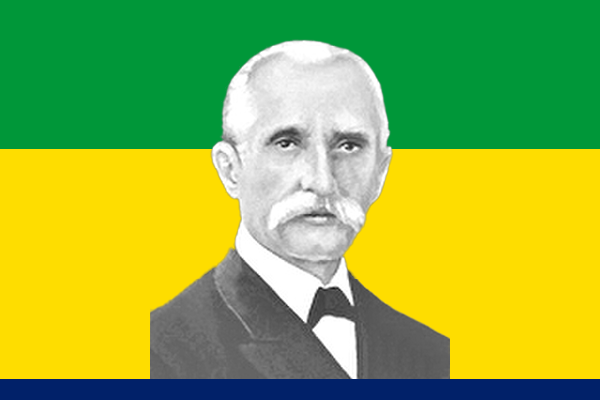
Early Life and Education
Urbano Santos was born on May 26, 1878, in Calbayog, Samar, during the Spanish colonial period. He grew up in a family that valued education and civic responsibility. Santos pursued his early studies in Samar before moving to Manila, where he attended the University of Santo Tomas. There, he earned his law degree and became one of the few Filipinos of his time to achieve such a distinction. His passion for justice and governance drove him to study hard and prepare himself for a life of public service.
Legal Career and Public Service
After completing his law degree, Santos immediately entered the legal profession. He built a reputation as a fair and capable lawyer who defended the rights of his clients and upheld the law. His strong sense of justice and his deep understanding of Philippine society led him to take on cases that helped ordinary citizens.
Santos actively participated in civic and political organizations that sought reform and self-governance. His leadership qualities and professional integrity earned him the trust of both his peers and the Filipino public. His dedication to legal practice and civic engagement opened doors to higher positions in government.
Political Rise and Leadership
Urbano Santos entered politics with the aim of contributing to national development. He became part of the early political movements that advocated Filipino participation in government during the American colonial period. His commitment to national progress and his integrity in public service attracted the attention of political leaders who valued his expertise.
Santos served in several government posts, where he demonstrated excellent administrative skills. His ability to balance legal reasoning with practical governance made him a respected figure in the bureaucracy. He always prioritized the welfare of the people, believing that public office was a means to uplift society.
Vice Presidency and National Contribution
In 1920, Urbano Santos became the Vice President of the Philippines under President Manuel L. Quezon. As Vice President, he worked tirelessly to promote government reforms and strengthen institutions. He actively collaborated with the President in improving public administration and advancing social welfare programs.
Santos played a vital role in representing Filipino interests in both local and national affairs. He promoted education, law, and order, and supported initiatives that improved the lives of rural citizens. His leadership style reflected humility and diligence, and he worked to bridge divisions within society.
As Vice President, Santos also focused on uniting Filipinos under a shared national vision. He supported legislation that encouraged economic growth, civic participation, and cultural pride. His belief in democratic principles guided his decisions and policies.
Legacy and Impact
Urbano Santos left a lasting mark on Philippine history as a statesman of integrity and patriotism. His contributions to law, governance, and public service inspired generations of Filipino leaders. He believed that progress depended on education, civic virtue, and unity among the people.
Santos demonstrated that leadership requires not only intellect but also moral strength. Through his career, he upheld honesty and fairness in public life. His life serves as an example of how one man’s dedication can influence the development of a nation.
Conclusion
Vice President Urbano Santos stands out as one of the Philippines’ most principled public servants. His journey from a small-town student to a national leader reveals his commitment to justice and good governance. By actively shaping policies and advocating national unity, Santos strengthened the foundations of the Philippine government and inspired a legacy of service that endures to this day.