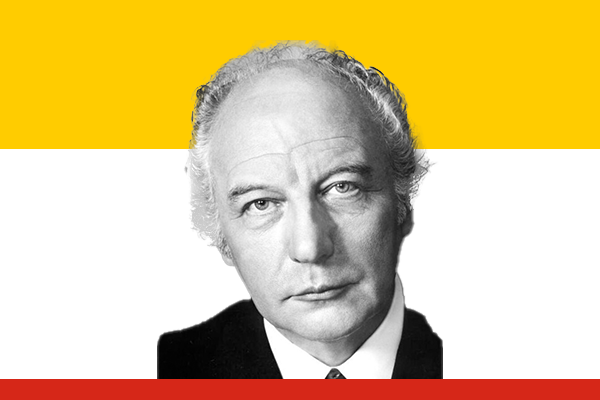
Early Life and Education
Walter Scheel was born on July 8, 1919, in Solingen, Germany. He grew up during a period of political instability and economic hardship, which shaped his worldview and future political principles. After completing his early education, Scheel studied economics and later served in the Luftwaffe during World War II. His experiences during the war deeply influenced his belief in peace, democracy, and European unity.
Entry into Politics
After the war, Walter Scheel joined the Free Democratic Party (FDP) in 1946. He quickly gained recognition for his moderate views and organizational skills. Scheel served in various party leadership roles and became known for his efforts to rebuild Germany’s democratic institutions. He believed that Germany’s recovery depended on strong international alliances and economic stability. His political philosophy combined liberal economic ideas with social responsibility, earning him respect across party lines.
Rise to Leadership
In the 1960s, Walter Scheel emerged as one of the key figures in West German politics. As the FDP leader, he played a crucial role in ending the coalition between the FDP and the Christian Democratic Union (CDU), paving the way for a new political direction. In 1969, Scheel’s FDP formed a coalition government with the Social Democratic Party (SPD), led by Chancellor Willy Brandt. Scheel became Vice Chancellor and Minister of Foreign Affairs.
In his capacity as Foreign Minister, Scheel actively supported Brandt’s Ostpolitik, a policy aimed at improving relations with Eastern Europe and the Soviet Union. He believed in dialogue over confrontation and worked tirelessly to strengthen Germany’s role in promoting peace and reconciliation across Europe. His diplomatic skills helped West Germany sign several historic treaties that normalized relations with Eastern Bloc countries.
Tenure as Acting Chancellor
After Chancellor Willy Brandt resigned in 1974 following a political scandal, Walter Scheel temporarily assumed the role of Acting Chancellor. During his brief tenure, he maintained governmental stability and ensured a smooth transition of power to Helmut Schmidt. His calm leadership during this critical period demonstrated his political maturity and sense of duty.
Presidency and Later Contributions
Following his time as Acting Chancellor, Scheel was elected as the President of the Federal Republic of Germany in 1974, serving until 1979. As President, he promoted democratic values, European integration, and global peace. He encouraged national unity and modernization, representing Germany with dignity and moral strength.
Scheel’s presidency reflected his lifelong dedication to democracy and liberal values. Even after leaving office, he remained an influential figure in German politics and continued to advocate for European cooperation and human rights.
Legacy and Impact
Walter Scheel is remembered as one of Germany’s most respected political figures. He guided the country through a period of significant transformation and helped lay the groundwork for modern German diplomacy. His vision of a peaceful, united Europe continues to inspire leaders today.
Scheel’s legacy is not only marked by his political achievements but also by his humanity, humor, and commitment to public service. His famous rendition of the song “Hoch auf dem gelben Wagen” reflected his warmth and connection with the German people.
Conclusion
Walter Scheel’s career showcased his unwavering dedication to democracy, diplomacy, and European unity. From his early days in the FDP to his leadership roles as Foreign Minister, Acting Chancellor, and President, Scheel consistently worked for peace and progress. His contributions remain a vital part of Germany’s political and historical landscape.