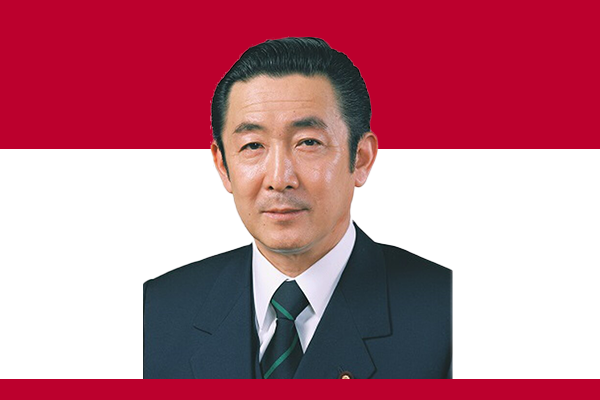
Ryutaro Hashimoto: Reforming Japan’s Economy and Politics
Ryutaro Hashimoto, born on July 29, 1937, in Sōja, Okayama Prefecture, rose to prominence as a skilled politician and influential leader of the Liberal Democratic Party (LDP). As the eldest son of Ryogo Hashimoto, a former Minister of Education and Health and Welfare, Ryutaro inherited a legacy of public service. After graduating from Keio University’s Faculty of Law in 1960, he entered politics, winning a seat in the House of Representatives in 1963, succeeding his late father. From the start, he demonstrated keen insight into governance and policy-making, quickly establishing himself as a central figure within the LDP.
Early Political Career
Hashimoto assumed key cabinet roles that prepared him for national leadership. He served as Minister of Health and Welfare under Prime Minister Masayoshi Ōhira, Minister of Transport under Yasuhiro Nakasone, and Minister of Finance under Toshiki Kaifu. In 1994, he became Minister of International Trade and Industry, where he influenced Japan’s economic policies and positioned himself as a forward-thinking reformer. Through these roles, Hashimoto honed his expertise in both domestic and international economic matters, earning respect across party lines.
Ascending to the Prime Ministership
In January 1996, Hashimoto became Japan’s 82nd Prime Minister, leading a coalition government with the Social Democratic Party and New Party Sakigake. Immediately, he prioritized economic reform to address Japan’s prolonged stagnation following the bursting of the asset bubble. He implemented the “Big Bang” financial reforms, which liberalized financial markets, enhanced transparency, and promoted competition among banks and securities firms. By championing deregulation and structural modernization, Hashimoto sought to restore investor confidence and revitalize Japan’s economy.
Economic and Political Challenges
Despite his ambitious reforms, Hashimoto faced persistent challenges. Economic growth remained sluggish, and his fiscal policies sparked criticism for increasing public debt and straining social welfare programs. Furthermore, his government encountered political friction as coalition partners occasionally opposed his initiatives. Nevertheless, Hashimoto demonstrated decisive leadership, striving to balance reform with social stability.
Resignation and Legacy
After the LDP suffered a significant loss in the July 1998 upper house elections, Hashimoto took full responsibility and resigned as both Prime Minister and LDP president. He openly stated, “Our failure in the election is my fault and responsibility,” demonstrating his accountability and commitment to political ethics. Even after stepping down, Hashimoto continued to shape Japanese politics, influencing LDP strategy and mentoring future leaders.
Later Life and Influence
Hashimoto remained active in political circles until his death on July 1, 2006, due to complications following abdominal surgery. His contributions to Japan’s economic and political landscape endure. By introducing substantial financial reforms, advocating modernization, and demonstrating accountable leadership, Hashimoto left a legacy that continues to influence policy-making and governance in Japan. Scholars and political analysts often study his tenure to understand the complexities of reforming a mature economy while maintaining coalition stability.
Conclusion
Ryutaro Hashimoto’s tenure as Prime Minister, though brief, marked a pivotal period in Japan’s postwar history. Through proactive leadership, ambitious economic reforms, and personal accountability, he reshaped Japan’s financial sector and set a precedent for political responsibility. His vision, determination, and reform-oriented approach left an enduring mark on Japanese politics and serve as a benchmark for future leaders seeking to balance economic progress with social cohesion.