Early Life and Education
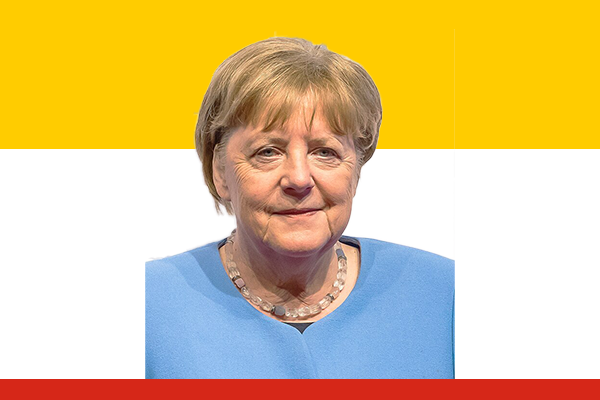
Angela Merkel was born on July 17, 1954, in Hamburg, West Germany. Her family moved to East Germany shortly after her birth. Merkel grew up in Templin, where she developed a strong interest in science and mathematics. She studied physics at the University of Leipzig and later earned a doctorate in quantum chemistry. Her scientific background shaped her analytical and methodical approach to politics.
Entry into Politics
Merkel began her political journey after the fall of the Berlin Wall in 1989. She joined the newly formed political party Demokratischer Aufbruch (Democratic Awakening), which later merged with the Christian Democratic Union (CDU). Her intelligence and composure caught the attention of then-Chancellor Helmut Kohl, who appointed her as Minister for Women and Youth in 1991. Merkel quickly proved her capability and dedication, which propelled her rise within the CDU.
Becoming Chancellor
In 2005, Angela Merkel became the first female Chancellor of Germany and the first leader from the former East Germany to hold the position. Her election marked a significant moment in European politics. Merkel led a coalition government between the CDU/CSU and the Social Democratic Party (SPD). From her first term, she focused on economic stability, social welfare reforms, and Germany’s role within the European Union.
Leadership During Crises
Merkel demonstrated remarkable resilience during multiple global crises. She managed the 2008 global financial crisis with firm economic strategies that kept Germany’s economy stable. When the Eurozone faced debt crises, Merkel defended the euro by supporting bailouts under strict financial reforms, ensuring the stability of the European economy.
During the 2015 refugee crisis, Merkel made a humanitarian decision by opening Germany’s borders to over one million refugees. Her statement, “Wir schaffen das” (“We can do it”), became symbolic of her compassionate yet determined leadership. Although her policy sparked debate, it reflected her moral conviction and commitment to European solidarity.
Economic and Foreign Policy Achievements
Merkel strengthened Germany’s position as Europe’s economic powerhouse. She encouraged innovation, renewable energy development, and fiscal discipline. Her foreign policy focused on diplomacy and cooperation. Merkel maintained strong ties with the United States, supported NATO, and played a crucial role in managing relations with Russia and China. She consistently promoted unity within the European Union, especially during Brexit negotiations.
Legacy and Retirement
After sixteen years in office, Merkel stepped down in 2021, leaving behind an era of stability and pragmatic governance. She earned respect worldwide for her calm leadership, data-driven decisions, and commitment to democracy. Merkel’s ability to lead through consensus rather than confrontation made her one of the most trusted leaders in modern history.
Her legacy continues to shape Germany’s domestic and foreign policies. She is remembered not only as the “Iron Chancellor” of modern Europe but also as a leader who prioritized responsibility, rationality, and empathy in politics.
Conclusion
Angela Merkel transformed Germany into a symbol of stability and strength. She led with intellect, courage, and compassion, influencing both European and global affairs. Her pragmatic decisions and steady leadership left an indelible mark on history, making her one of the most remarkable leaders of the 21st century.