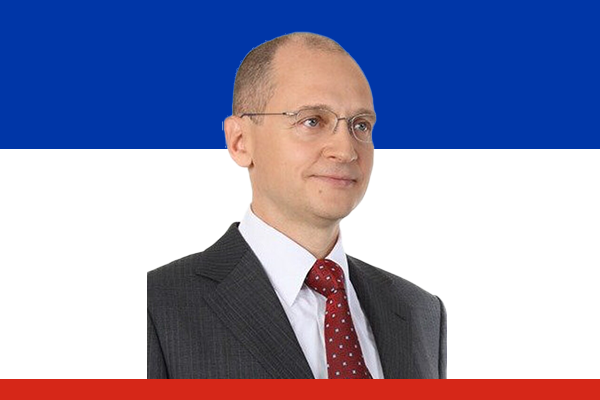
Early Life and Political Beginnings
Sergey Vladilenovich Kiriyenko was born on July 26, 1962, in Sukhumi, Abkhazia. He studied at the Gorky Institute of Water Transport Engineers and later entered the business world before moving into politics. Kiriyenko actively engaged in local economic activities and entrepreneurship during the early 1990s, which provided him with practical experience in management and financial operations. His early work in the private sector shaped his technocratic approach to government leadership.
Rise to Political Prominence
Kiriyenko’s political ascent began when he joined the “Russia’s Choice” movement and later became part of the “Union of Right Forces.” His administrative efficiency attracted attention in Moscow. In 1997, President Boris Yeltsin appointed him as Deputy Minister of Fuel and Energy. Kiriyenko actively worked to modernize the energy sector, streamline operations, and reduce corruption. His proactive attitude and strong results convinced Yeltsin to promote him further.
Appointment as Prime Minister
In April 1998, Boris Yeltsin appointed Sergey Kiriyenko as the Prime Minister of Russia. At just 35 years old, he became the youngest person ever to hold the position. Kiriyenko accepted the challenge and actively sought to stabilize the economy, which was facing inflation, debt, and financial instability. He immediately initiated reforms designed to strengthen fiscal discipline and improve investor confidence.
Kiriyenko formed a cabinet filled with young reformers who actively introduced modern economic strategies. He believed in transparent governance and sought to integrate Russia’s economy more closely with global financial systems. Despite facing criticism for his inexperience, Kiriyenko worked tirelessly to balance reform with political realities.
Confronting the 1998 Financial Crisis
Kiriyenko’s tenure coincided with one of Russia’s worst financial crises. In August 1998, the Russian ruble collapsed, and the government defaulted on domestic debt. Kiriyenko actively engaged with international financial institutions and sought emergency measures to manage the crisis. Although he worked diligently to restore economic stability, the severity of the crisis overwhelmed his administration.
President Yeltsin dismissed Kiriyenko and his cabinet in August 1998, but Kiriyenko’s proactive approach and courage during the crisis earned him widespread respect. He accepted responsibility for the outcomes and emphasized the need for deeper economic restructuring in Russia.
Later Political and Administrative Roles
After leaving the Prime Minister’s office, Kiriyenko remained active in Russian politics. He co-founded the “Union of Right Forces” party, promoting liberal economic policies and democratic principles. In 2000, President Vladimir Putin appointed him as the Presidential Representative to the Volga Federal District. Kiriyenko actively strengthened regional governance, encouraged investment, and implemented federal programs for economic modernization.
Later, he served as the head of Rosatom, Russia’s state nuclear energy corporation. Under his leadership, Rosatom expanded globally and modernized its infrastructure. Kiriyenko actively advanced Russia’s position in nuclear technology and energy diplomacy, turning the corporation into one of the world’s leading nuclear enterprises.
Legacy and Influence
Sergey Kiriyenko remains a symbol of Russia’s generation of young reformers who aimed to modernize the country after the Soviet era. His proactive management style, focus on efficiency, and dedication to reform reflect his long-term commitment to Russia’s progress. Even in later administrative roles, he continued to influence national policies and development strategies.
Kiriyenko’s brief but eventful premiership demonstrated his ability to confront crises and lead with resilience. Through every stage of his career, he actively sought to combine technological innovation with responsible governance, leaving a lasting mark on Russia’s modern political and economic history.