Mr. Dmitry Medvedev
In Office: 7 May 2008 – 7 May 2012
Political Party: United Russia
Home State: Saint Petersburg
Lifespan: Born 1965
Country: Russia
Image credits available here.
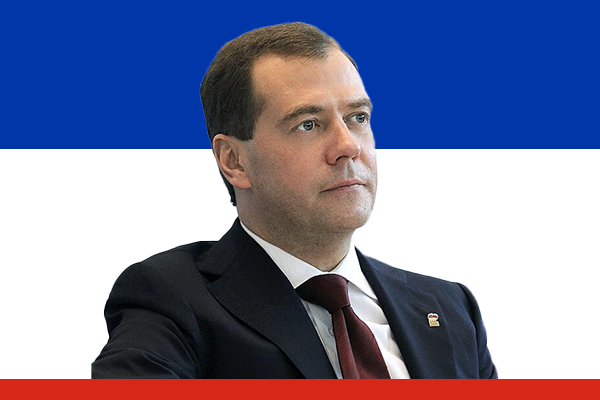
Early Life and Education
Dmitry Anatolyevich Medvedev was born on September 14, 1965, in Leningrad, now known as Saint Petersburg. He grew up in a family that valued education and discipline. Medvedev studied law at Leningrad State University, where he developed a strong interest in legal and constitutional studies. After graduating, he began teaching civil and Roman law at the same university, actively contributing to academic research and publications. His early academic career shaped his rational, law-oriented approach to governance.
Entry into Politics
Medvedev entered politics in the early 1990s during the reform period following the collapse of the Soviet Union. He worked with Anatoly Sobchak, the mayor of Saint Petersburg, where he met Vladimir Putin, then Sobchak’s advisor. Medvedev actively managed administrative affairs and legal projects that supported economic reforms in the city. His efficiency and loyalty earned him Putin’s trust, and as Putin rose through the political ranks, Medvedev followed, taking on important responsibilities in the federal government.
Rise to the Presidency
When Vladimir Putin became President of Russia in 2000, Medvedev joined his administration as Deputy Head of the Presidential Staff and later became Chief of Staff. He actively coordinated domestic policy and legal reforms. In 2005, Putin appointed him as First Deputy Prime Minister, where Medvedev oversaw national projects related to health, education, housing, and agriculture. These programs aimed to improve citizens’ quality of life and modernize Russia’s infrastructure.
In 2008, Medvedev won the presidential election with overwhelming support. His presidency marked a new chapter in Russian politics, one that emphasized modernization, innovation, and international cooperation.
Presidential Leadership and Reforms
As President, Medvedev actively pursued policies to reduce Russia’s dependency on natural resources and promote technological development. He launched the “Modernization Program,” which encouraged investment in high technology, energy efficiency, and telecommunications. Medvedev strongly supported the development of the Skolkovo Innovation Center, often referred to as “Russia’s Silicon Valley,” to foster entrepreneurship and scientific research.
He also advocated for political reform and greater transparency in government institutions. Medvedev implemented measures to combat corruption, modernize the judiciary, and simplify bureaucratic processes. Though challenges remained, his efforts reflected his belief in legal order and modernization as tools for national progress.
Foreign Policy and International Relations
Medvedev played an active role in strengthening Russia’s international relations. He sought to reset relations with the United States, signing the New START treaty with President Barack Obama in 2010 to reduce nuclear arsenals. He also worked to enhance Russia’s influence within organizations such as BRICS and the G20.
During his presidency, Medvedev handled the 2008 Russia-Georgia conflict, maintaining Russia’s strategic interests while managing global diplomatic responses. His leadership demonstrated a mix of assertiveness and pragmatism in foreign policy.
Partnership with Vladimir Putin
Medvedev maintained a close working relationship with Vladimir Putin throughout his political career. Their partnership, often described as a “tandem,” ensured policy continuity and political stability. When Putin returned to the presidency in 2012, Medvedev became Prime Minister, continuing to influence Russia’s domestic and economic policy. This cooperation highlighted their complementary leadership styles—Putin’s strong geopolitical stance balanced with Medvedev’s reformist and legalistic approach.
Legacy and Continuing Influence
Dmitry Medvedev’s presidency symbolized a period of modernization and cautious reform in Russia’s post-Soviet history. He promoted innovation, rule of law, and international cooperation while preserving political stability. Even after serving as Prime Minister, Medvedev continued to play a significant role in Russian politics as Deputy Chairman of the Security Council.
His leadership reflected a pragmatic vision for Russia’s future—one that valued modernization, technological advancement, and balanced diplomacy.
Conclusion
President Dmitry Medvedev’s tenure showcased an active commitment to reform, modernization, and global engagement. His balanced leadership and partnership with Vladimir Putin left a lasting mark on Russia’s development and its position in the international arena.